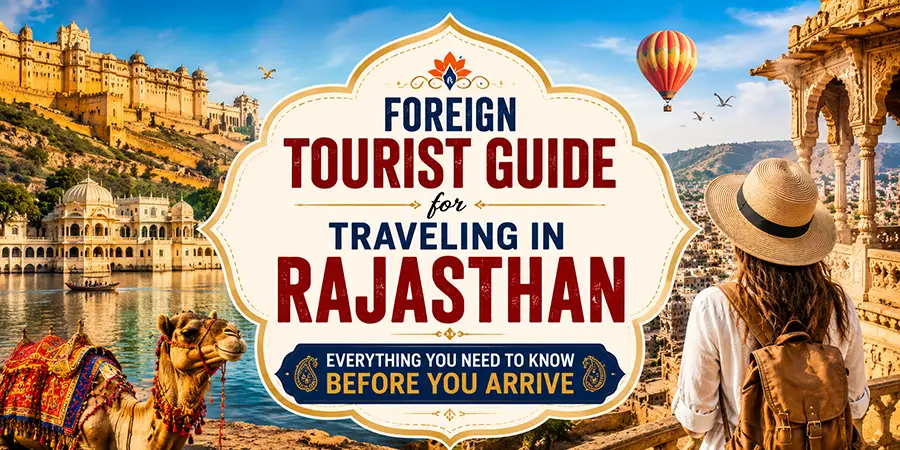
Foreign Tourist Guide for Traveling in Rajasthan: Everything You Need to Know Before You Arrive
Imagine getting off the train at dawn at Jaipur Junction. The air smells faintly of marigolds and chai. A cycle rickshaw weaves past a camel cart. Somewhere nearby, a temple bell rings. And right there — before you’ve even found your hotel — you realize: this place is unlike anywhere else on earth.
That is Rajasthan.
And if you’re a foreign tourist planning your first trip here, you’ve made one of the best decisions of your travel life. But Rajasthan is vast, layered, and delightfully complicated. It helps to know a few things before you arrive — so you spend more time experiencing it and less time figuring it out.
This guide covers everything: visas, best timing, how to get around, what things actually cost, cultural etiquette, safety, and the kind of insider tips that only come from years of watching travelers navigate this incredible state.
First Things First: Do You Need a Visa for India?
Yes, in most cases. But it’s easier than you think.
India offers an e-Visa facility to citizens of over 150 countries — and for most foreign tourists, this is the simplest way in.
How the e-Visa Works
The e-Tourist Visa comes in three duration options: 30 days, 1 year, and 5 years. For the 1-year and 5-year variants, the maximum stay during one calendar year should not exceed 180 days.
The only correct official portal is https://indianvisaonline.gov.in/evisa/tvoa.html — be cautious of lookalike sites that charge double or triple the real cost.
What you need to apply:
- Valid passport (with at least 6 months validity from the date of arrival)
- A recent passport-size photo
- Scanned copy of your passport bio page
- Payment by credit/debit card
It is recommended to apply at least 20–25 days before your date of departure. This gives you a buffer period in case of any payment failures or errors in the application form without rushing it.
You are granted an Electronic Travel Authorization (ETA). After approval, your biometrics are taken when you arrive at the immigration counter.
Good to know: From October 2025, all foreign travelers arriving in India will have the option of completing an electronic arrival form instead of the traditional paper form, which can be filled out online up to 72 hours before travel.
Imagine getting off the train at dawn at Jaipur Junction. The air smells faintly of marigolds and chai. A cycle rickshaw weaves past a camel cart. Somewhere nearby, a temple bell rings. And right there — before you’ve even found your hotel — you realize: this place is unlike anywhere else on earth.
That is Rajasthan.
And if you’re a foreign tourist planning your first trip here, you’ve made one of the best decisions of your travel life. But Rajasthan is vast, layered, and delightfully complicated. It helps to know a few things before you arrive — so you spend more time experiencing it and less time figuring it out.
This guide covers everything: visas, best timing, how to get around, what things actually cost, cultural etiquette, safety, and the kind of insider tips that only come from years of watching travelers navigate this incredible state.
First Things First: Do You Need a Visa for India?
Yes, in most cases. But it’s easier than you think.
India offers an e-Visa facility to citizens of over 150 countries — and for most foreign tourists, this is the simplest way in.
How the e-Visa Works
The e-Tourist Visa comes in three duration options: 30 days, 1 year, and 5 years. For the 1-year and 5-year variants, the maximum stay during one calendar year should not exceed 180 days.
The only correct official portal is https://indianvisaonline.gov.in/evisa/tvoa.html — be cautious of lookalike sites that charge double or triple the real cost.
What you need to apply:
- Valid passport (with at least 6 months validity from the date of arrival)
- A recent passport-size photo
- Scanned copy of your passport bio page
- Payment by credit/debit card
It is recommended to apply at least 20–25 days before your date of departure. This gives you a buffer period in case of any payment failures or errors in the application form without rushing it.
You are granted an Electronic Travel Authorization (ETA). After approval, your biometrics are taken when you arrive at the immigration counter.
Good to know: From October 2025, all foreign travelers arriving in India will have the option of completing an electronic arrival form instead of the traditional paper form, which can be filled out online up to 72 hours before travel.
Who is not eligible for the e-Visa:
- Pakistani nationals (apply through an Indian mission)
- Holders of diplomatic/official passports
- Travelers with Pakistani roots in their immediate family line (parents/grandparents)
If your country is not on the e-Visa list, you will need to apply for a regular visa at your nearest Indian embassy or consulate.ry is not on the e-Visa list, apply for a regular visa through your nearest Indian embassy or consulate.
When Should You Visit Rajasthan?
This single question can make or break your entire trip.
October to March — The Golden Window
The weather in Rajasthan is best from October to the end of March. Temperatures are comfortable, the skies are clear, and desert nights are pleasantly cool. This is peak season — the forts are crowded, hotels fill up, and yes, prices are higher. But the experience is worth every rupee.
- October–November: Post-monsoon green Rajasthan, Pushkar Camel Fair
- December–January: Coolest temperatures (some desert nights can drop to 5–7°C), ideal for Jaisalmer camel safaris
- February–March: Pleasant days, festival season picks up (Holi, Gangaur, Elephant Festival in Jaipur)
April to June — The Heat Surge
Summers in Jaipur are harsh, with temperatures often exceeding 45°C (113°F), making sightseeing challenging. If you must travel in summer, start every monument visit before 9 AM and retreat by noon.
July to September — The Monsoon Surprise
Rajasthan receives the least rainfall of any Indian state, but the southern parts (Udaipur, Kota, Bundi) do get genuine monsoon showers. The landscape turns shockingly green. Tourist traffic drops significantly. There are real advantages to traveling during the off season — fewer travelers and lower rates are just two.
Udaipur in the monsoon, with mist over Lake Pichola and cool evenings on rooftop cafés, is honestly one of Rajasthan’s best-kept secrets.
Getting to Rajasthan: Your Entry Options
By Air
Rajasthan has four main airports with international/domestic connectivity:
- Jaipur (JAI) — best connected to Delhi, Mumbai, Kolkata, and some international hubs
- Udaipur (UDR) — great entry point for southern Rajasthan
- Jodhpur (JDH) — smaller airport but very convenient for the Blue City
- Jaisalmer (JSA) — limited flights, mostly from Delhi and Mumbai
Most international travelers fly into Delhi (DEL) and then take an onward domestic flight or overnight train to Rajasthan. Delhi to Jaipur is just 35 minutes by air.
By Train
India’s rail network is one of the world’s largest — and for a foreign tourist, overnight trains are genuinely one of the best travel experiences in Rajasthan.
The Rajasthan Sampark Kranti Express, Shatabdi, and Double Decker Express connect Jaipur to Delhi in 4–5 hours. Overnight trains between Jaipur, Jodhpur, Jaisalmer, and Udaipur are well-serviced.
Book train tickets at: https://www.irctc.co.in
Foreign tourists can also use the Foreign Tourist Quota (FTQ) — a reserved quota of seats on major trains — by booking at the International Tourist Bureau at major railway stations (like New Delhi Railway Station, Platform 1).
By Road
Navigating between cities is a crucial component of travelling to Rajasthan. Private car hire with a driver is the most popular option for foreign tourists — it gives you flexibility and door-to-door convenience. A Rajasthan road trip by car (Jaipur → Jodhpur → Jaisalmer → Udaipur) is one of the classic ways to see the state.
Distances are real here: Jaipur to Jaisalmer is over 560 km. Plan accordingly.
The Classic Rajasthan Circuit for Foreign Tourists
Allow two weeks if you want to visit the major cities of Jaipur, Jodhpur, and Udaipur, in addition to Delhi and the Taj Mahal. Three weeks is brilliant!
That said, here’s how most travelers structure their Rajasthan visit:
7–10 Days (First-Time Visitors)
Jaipur (2–3 nights) → Jodhpur (2 nights) → Jaisalmer (2 nights) → Udaipur (2–3 nights)
This is the classic “Golden Triangle Plus Desert” route. It covers the Pink City, Blue City, Desert Gold, and the Lake City. Most people leave deeply satisfied — and desperately wanting to come back.
14+ Days (Deep Dive)
Add in: Pushkar (spiritual lake town), Ranthambore National Park (tigers), Bundi (almost untouched, brilliant frescoes), Kumbhalgarh (the Great Wall of India), or Shekhawati (painted haveli towns).
Entry Fees at Major Rajasthan Monuments: What Foreign Tourists Pay
Here’s something no one tells you upfront: entry fees in India have a dual-pricing system. Indian nationals and foreign nationals pay different rates. It’s the law, and it applies across most government monuments.
Below are approximate current rates for foreign tourists (always verify at the ticket counter as fees can be updated):
Jaipur
| Monument | Foreign Tourist Fee (Approx.) |
|---|---|
| Amber Fort | ₹700 per person |
| City Palace (basic entry) | ₹700 per person |
| Chandra Mahal (inside City Palace) | ₹1,500 additional |
| Hawa Mahal | ₹200 per person |
| Jantar Mantar | ₹200 per person |
| Nahargarh Fort | ₹300 per person |
| Jaigarh Fort | ₹300 per person |
| Albert Hall Museum | ₹300 per person |
A composite ticket is available for ₹1,000, covering entry to 7 monuments including City Palace, Amber Fort, Jantar Mantar, and Hawa Mahal — saving both money and time. Ask for it at any of these monuments.
Expert Tip: The composite ticket is excellent value if you’re visiting 3+ monuments in Jaipur. Buy it at your first stop.
Jodhpur
Mehrangarh Fort: Indian Adults ₹200–₹300, Foreigners ₹700. The museum and royal tour premium ticket runs ₹3,000–₹3,500. The premium tour includes private gallery access and is worth it for history enthusiasts.
Udaipur
The City Palace museum in Udaipur charges approximately ₹500–₹700 for foreign tourists. The famous Jag Mandir island visit costs extra (boat entry included). Exact prices vary; check the current ticket counter rates.
Jaisalmer
Jaisalmer Fort (a living fort — people actually live inside): Entry is free to walk around the lanes. The royal palace museum inside charges approximately ₹250–₹300 for foreign tourists.
Note: Entry fees are updated periodically by state and monument authorities. Always carry cash as some counters may not accept cards. Always confirm current rates at the ticket counters or official websites, especially after any government announcements.
Official booking portal for Rajasthan monuments: https://obms-tourist.rajasthan.gov.in
Getting Around Inside Rajasthan’s Cities
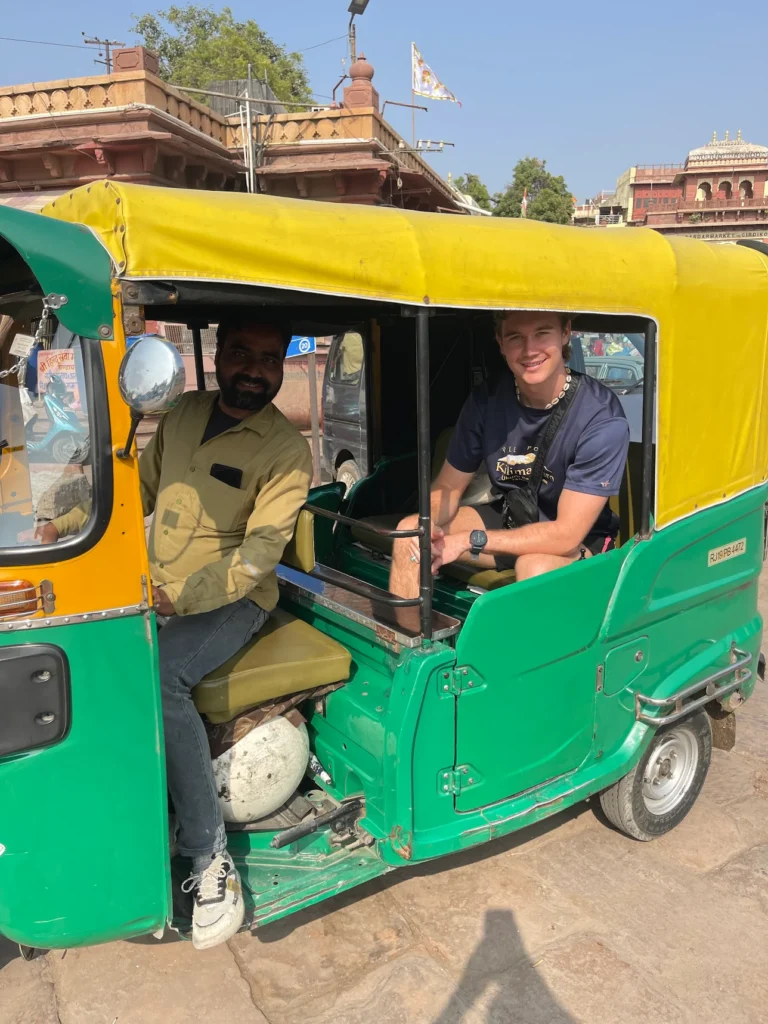
Auto-rickshaws and e-rickshaws are the most common mode for short distances. Always agree on the fare before you get in, or use an app like Ola or Rapido.
Bike rentals are available in most cities — great for exploring Udaipur or Pushkar at your own pace. Expect to pay ₹300–₹500 per day for a good scooter.
Uber and Ola are available in Jaipur, Jodhpur, and Udaipur. In smaller towns, pre-book a local cab.
Tuk-tuk tours offered by hotels are usually overpriced. Negotiate your own rate or use your hotel’s trusted driver contact.
Money, Payments & Budgeting
Currency: Indian Rupee (INR). As of mid-2025, 1 USD ≈ ₹83–₹84.
ATMs are available across all major cities. Carry cash in smaller towns and rural areas — digital payments are growing but not universal.
UPI payments (Google Pay, PhonePe) are now widely accepted at restaurants and larger shops. Foreigners with international bank accounts can sometimes link to UPI via specific apps, but cash is always the safe fallback.
Budget range per day (rough guide for foreign tourists):
| Budget Level | Approx. Daily Spend (USD) |
|---|---|
| Budget backpacker | $30–$50 |
| Mid-range comfort | $80–$150 |
| Heritage hotel luxury | $200–$500+ |
Rajasthan offers some of the world’s most remarkable heritage hotel experiences. Heritage hotels are places to immerse yourself in class and opulence — beautifully restored forts or former Maharajas’ palaces boasting fine Rajput or Mughal architecture. Spending a night in a palace hotel is, for many, the trip highlight.
Cultural Etiquette: How to Travel Respectfully in Rajasthan
Rajasthan is deeply rooted in tradition. A little awareness goes a long way.
Dress Code
At temples and mosques: Always remove footwear. Cover your shoulders and legs — men and women alike. Carry a light scarf or shawl in your day bag.
In markets and public spaces: Modest dress is appreciated. Sleeveless tops and shorts are common among tourists in tourist areas, but in smaller towns and religious spaces, conservative dress earns you much more warmth and respect from locals.
Photography
Rajasthan is irresistibly photogenic. But always ask before photographing people — especially women, elders, and in religious spaces. A smile and a gesture go further than a camera pointed without permission.
Photographing inside museums and some palace sections may require an extra camera fee (typically ₹50–₹200). Check the board at entry.
Bargaining
Bargaining is completely normal in markets. In fact, it’s expected at craft shops, markets, and with auto-rickshaw drivers. Start at 40–50% of the quoted price and meet somewhere in the middle.
At fixed-price stores (government emporiums, most restaurants, heritage hotels), prices are as listed. Don’t bargain there.
Giving to Children
Well-meaning tourists often give sweets, pens, or money to children asking at monument gates. While the intention is kind, this practice unintentionally encourages children to skip school for begging. If you want to contribute, donate to a verified local NGO or school.
Drinking Water
Travellers should exclusively consume bottled or thoroughly filtered water to prevent waterborne illnesses. In restaurants, always ask specifically for “mineral water” or “sealed water” — never assume the water served is safe for foreign stomachs.
Carry a 1-litre water bottle at all times while sightseeing.
Is Rajasthan Safe for Foreign Tourists?
The honest answer: yes, with standard precautions.
Rajasthan is generally safe for international tourists. Visitors should exercise standard precautions, such as securing valuables and avoiding unlit areas at night.
A few specific things to know:
Touts and commission agents: In major tourist areas (Jaipur’s Amber Fort road, Jaisalmer Fort approach), you’ll encounter persistent touts directing you to shops, hotels, or tours. They earn a commission. You don’t have to follow them. Be politely firm and walk on.
Gem scams: Travelers to India — and especially to Rajasthan — love to shop for fine jewelry because the prices are so good. But you need to go somewhere reputable, otherwise you may be sold glass instead of diamonds. Buy gems and jewelry only from shops recommended by your hotel or from government-certified emporiums.
Elephant rides at Amber Fort: The Amber Palace in Jaipur has faced serious criticism for elephant tourism, with mahouts using bull hooks to tame animals and elephants carrying tourists up and down the hill. Consider taking the jeep ride up the hill instead, which offers just as good a view of the fort’s dramatic approach.
Lone female travelers: Rajasthan sees a significant number of solo women travelers from around the world. Most experiences are positive. Stick to well-lit, tourist-frequented areas after dark, inform your hotel if you’re returning late, and trust your instincts.
English language: English is widely spoken in the hospitality sector, at tourist attractions, and by professional guides. In smaller towns, basic communication in Hindi is handy — but you’ll almost always find someone who can help in English at any significant tourist spot.
Mobile SIM & Connectivity
A local SIM card is one of the best investments you’ll make on arrival.
Best options for tourists: Airtel or Jio prepaid tourist SIMs. You’ll need:
- Your passport (original + photocopy)
- A passport-size photo
- A local address (your hotel address works)
SIM cards are available at airports, official Airtel/Jio stores, and many authorized retailers. Expect to pay ₹300–₹600 for a prepaid plan with decent data for 28–30 days.
Wi-Fi is available at most mid-range and luxury hotels. In budget guesthouses, it can be unreliable — having your own data is essential.
Food: What to Eat, What to Skip, and Where to Find It
Rajasthani food is built for the desert — rich, hearty, and designed to last. Foreign tourists who embrace it come away obsessed.
Must-try dishes:
- Dal Baati Churma — Baked wheat balls with lentil curry and sweet crumbled bread. The ultimate Rajasthani comfort food.
- Laal Maas — Fiery mutton curry. Beautifully made in Jodhpur.
- Ker Sangri — Desert bean and berry stir-fry. Sounds unusual. Tastes extraordinary.
- Ghevar — Honeycomb sweet made with flour and sugar syrup. A festival favourite.
- Pyaaz Kachori — Flaky pastry filled with spiced onion. Jaipur’s signature street snack.
For sensitive stomachs: Most heritage and mid-range hotels offer a continental breakfast. Larger cities have cafés catering to international palates (hummus, pasta, sandwiches). Udaipur especially has a strong café culture with rooftop restaurants along the lake.
A note on spice: Rajasthani food can be genuinely fiery. When ordering, say “not too spicy please” — or use the Hindi phrase “thoda kam mirch”. Most kitchens will happily adjust.
Lesser-Known Experiences Most Tourists Miss
This is where the real magic is. Every tour brochure shows you Amber Fort and Mehrangarh. Fewer people talk about:
Bundi — A hill town in southeastern Rajasthan with frescoed step-wells, a crumbling palace, and almost no tour buses. Bundi is crammed with crumbling havelis, picturesque bazaars, and a surprising number of flamboyant baoris or “step-wells.” It’s exactly what Rajasthan must have looked like 30 years ago.
Shekhawati — A region of interconnected small towns (Mandawa, Nawalgarh, Fatehpur) where wealthy merchant families commissioned extraordinary painted havelis in the 18th and 19th centuries. Some are open to visitors, others are simply there to be discovered down dusty lanes.
Kumbhalgarh — A UNESCO-listed fort whose walls stretch over 36 km, earning it the nickname “the Great Wall of India.” Far fewer visitors than Amber or Mehrangarh. The sunrise from the battlements is something else.
Village stays and Bishnoi communities — Near Jodhpur, day excursions to Bishnoi villages give you a genuine glimpse into a community that has protected the region’s wildlife and environment for over 500 years. This is real Rajasthan, not the touristy version.
Ranthambore National Park — Ranthambore National Park is one of the easiest places in the world to see tigers in the wild, thanks to its large and exhibitionist population of big cats. Tiger safaris require advance booking — especially in peak season.
A Quick Packing List for Rajasthan
- Lightweight, modest clothing — cotton or linen, covers shoulders and knees
- One warm layer — desert nights in Nov–Feb get genuinely cold
- Sturdy walking shoes — fort courtyards and market lanes are uneven
- Sunscreen, sunglasses, and a hat — essential from March onwards
- Small daypack — for monument visits and market days
- Offline maps — download Jaipur, Jodhpur, Udaipur on Google Maps before you leave the hotel
- Copies of your passport and e-Visa printout — always carry these
Frequently Asked Questions
How many days do I need for Rajasthan?
While a comprehensive tour of the entire state requires three to four weeks, a well-planned 7-day itinerary is sufficient to experience the primary cultural and historical highlights of the region. For most foreign tourists, 10–14 days is the sweet spot.
Do I need a guide in Rajasthan?
Not mandatory, but highly recommended at major monuments. A licensed local guide brings forts and palaces to life in ways no signboard can. At Amber Fort, Mehrangarh, and the Udaipur City Palace, guided tours significantly deepen the experience. Many monuments also offer audio guide rentals at the ticket counter.
Can I drink alcohol in Rajasthan?
Yes. Alcohol is legally available in Rajasthan. Most mid-range and upscale restaurants and hotels serve beer, wine, and spirits. Government-licensed liquor shops are present in most cities. Dry days apply on national holidays and some religious occasions.
What currency should I carry?
Indian Rupees (INR). Exchange currency at your bank before departing, at airport exchange counters on arrival, or at authorized forex dealers in the city. Avoid exchanging money with strangers on the street.
Is it safe to eat street food in Rajasthan?
With sensible choices, yes. Stick to freshly cooked items (pyaaz kachori, jalebi, dal baati at popular dhabas) and avoid pre-cut fruits or uncooked salads from unknown vendors. A busy stall with high turnover is usually a safe sign.
Are there any restricted areas in Rajasthan?
A Protected Area Permit (PAP) is required to enter some parts of Rajasthan. This generally applies to areas near the India-Pakistan border. For standard tourist circuits (Jaipur, Jodhpur, Jaisalmer, Udaipur), no special permits are required.
Final Word: How to Travel Rajasthan Well
People who love Rajasthan often see less — not more.
That’s the single most honest piece of travel advice for this destination. Don’t try to tick every fort, every city, every market. Pick fewer places. Stay longer. Talk to the woman selling bangles outside Mehrangarh. Sit by Lake Pichola after sunset and just watch the light shift on the City Palace.
Rajasthan rewards the traveler who is willing to slow down and let it reveal itself. The forts are magnificent — but so is the sunset from a rooftop guesthouse in Bundi. The palace hotels are extraordinary — but so is chai from a clay cup at a roadside stall at dawn.
Come curious. Come open. Rajasthan will take care of the rest.
Have questions about planning your Rajasthan trip? Drop them in the comments below. And if you found this guide helpful, share it with someone who’s dreaming of the desert.