Top 5 Best Places to Shop in Jaipur – A Local’s Guide to the Pink City’s Markets
You land in Jaipur, dump your bags at the hotel, and within an hour — somehow — you’re standing in a narrow lane, staring at a shopkeeper dangling a pair of ruby earrings in front of you like he knows something about you that you don’t yet know yourself.
That’s Jaipur for you.
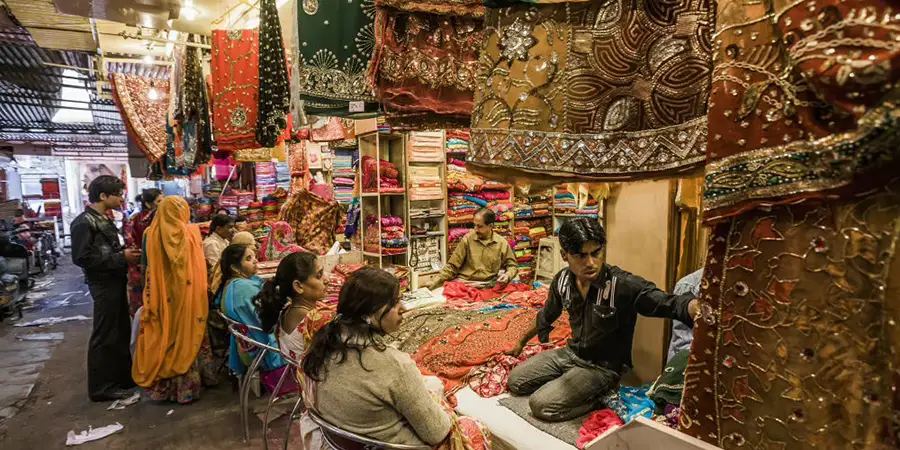
This city doesn’t just sell things. It performs shopping. Every bazaar has a personality, every lane has a story, and every shopkeeper is part artist, part storyteller. If you’ve been wondering where exactly to begin, this guide gives you the top 5 best places to shop in Jaipur — curated not just by popularity, but by what actually makes each one worth your time and money.
1. Johari Bazaar – The Jewel of Jaipur’s Markets
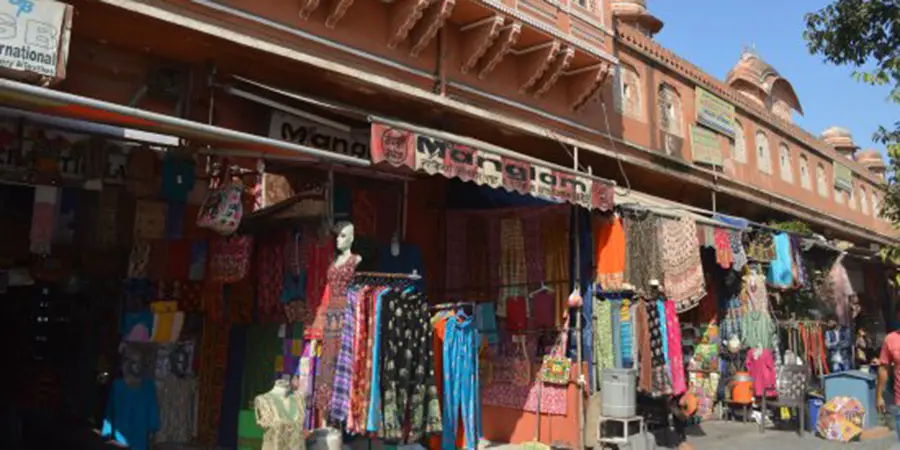
If Jaipur had a heart, Johari Bazaar would be it.
This is the city’s oldest and most iconic jewellery market, and it lives up to every bit of its reputation. The name literally means “jewellers’ market,” and the street delivers on that promise magnificently. You’ll find everything from Kundan and Meenakari pieces to raw gemstones and polki work — often sold by families who’ve been in the trade for generations.
What to buy:
- Kundan, Meenakari & Polki jewellery
- Precious and semi-precious gemstones
- Silver and gold ornaments
- Jaipuri quilts and ethnic wear (the side lanes are full of them)
Insider tip: Jaipur is one of the world’s largest gem-cutting and trading hubs. Prices here are significantly lower than in Mumbai or Delhi — but always bargain. Start at 40–50% of the quoted price.
Approx. price range: Silver jewellery ₹500–₹5,000 | Gemstone pieces ₹1,000–₹25,000+
Timings: 10 AM – 11 PM, all days
2. Bapu Bazaar – Jaipur’s Fashion Street
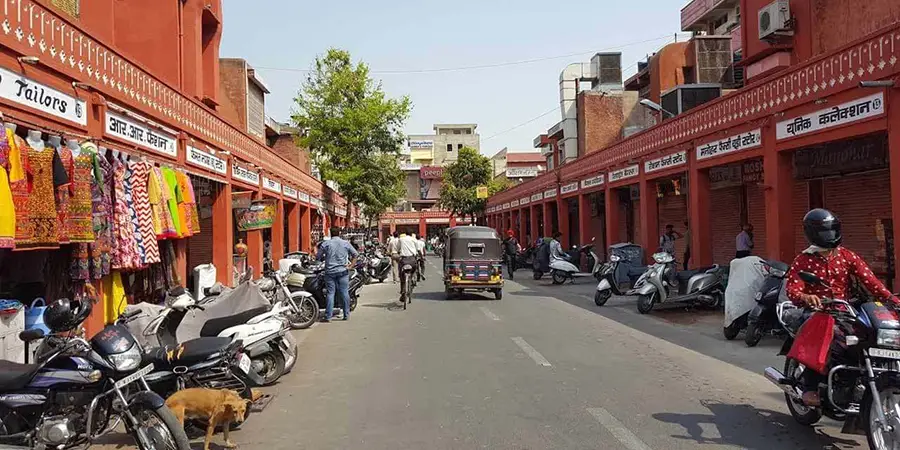
Think of Bapu Bazaar as Jaipur’s answer to Fashion Street in Mumbai — only with far more character and colour.
This is where you come for wearable Rajasthan. Leheria stoles, block-printed dupattas, Jaipuri razais (quilts), camel leather mojris (juttis), and Bandhani sarees line every shop front. It’s chaotic, colourful, and completely addictive.
What to buy:
- Mojri (traditional Rajasthani footwear) — a must-buy, starting from ₹300
- Leheria and Bandhani fabric
- Jaipuri razais (printed quilts), perfect as gifts
- Perfumes and local ittar (natural fragrances)
Insider tip: The mojris here are made from genuine camel leather and are far more durable than they look. Pick a pair in a traditional pattern — they last for years and never go out of style. Also, the shops near the MI Road end of Bapu Bazaar tend to have slightly better quality than those towards the centre.
Approx. price range: Mojris ₹300–₹1,500 | Quilts ₹700–₹3,000
Timings: 10:30 AM – 7:30 PM, all days
3. Tripolia Bazaar – Bangles, Brass & Old Jaipur Magic
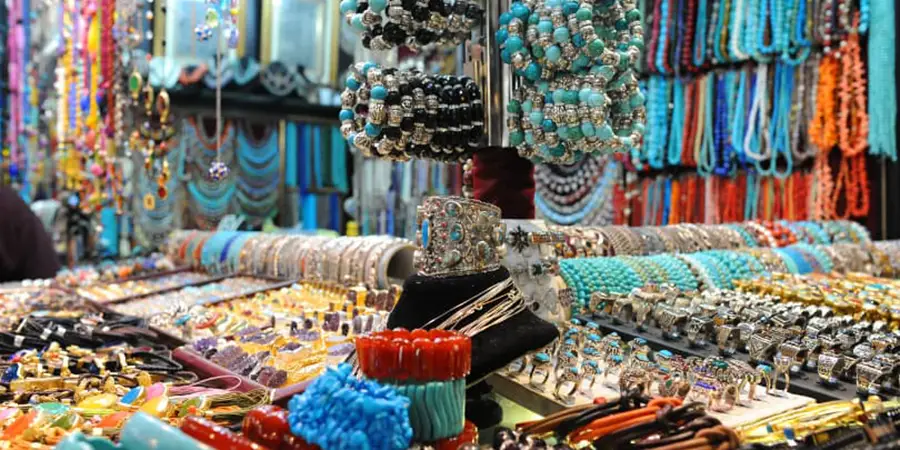
Tucked between two grand city gates near Badi Chaupar, Tripolia Bazaar has the kind of old-world charm that makes you slow down without realising it.
This market is famous for its lac bangles — handcrafted, jewel-bright, impossibly beautiful. The artisans here have been shaping these bangles for centuries, and you can sometimes watch them work right in the shop. Beyond bangles, the bazaar is home to brassware, Bandhani fabrics, and intricately embroidered textiles.
What to buy:
- Lac bangles (available in every colour imaginable)
- Brassware and traditional lamps
- Bandhani/Bandhej fabrics
- Embroidered textiles and cushion covers
Insider tip: Tripolia Bazaar closes on Sundays — plan accordingly. Also, if you’re buying lac bangles as gifts, ask the shopkeeper to pack them carefully. They’re delicate and break if pressed hard.
Approx. price range: Bangles ₹100–₹1,500 per set | Brassware ₹400–₹5,000
Timings: 10 AM – 7 PM (closed Sundays)
4. Chandpole Bazaar – Marble, Handicrafts & One-of-a-Kind Souvenirs
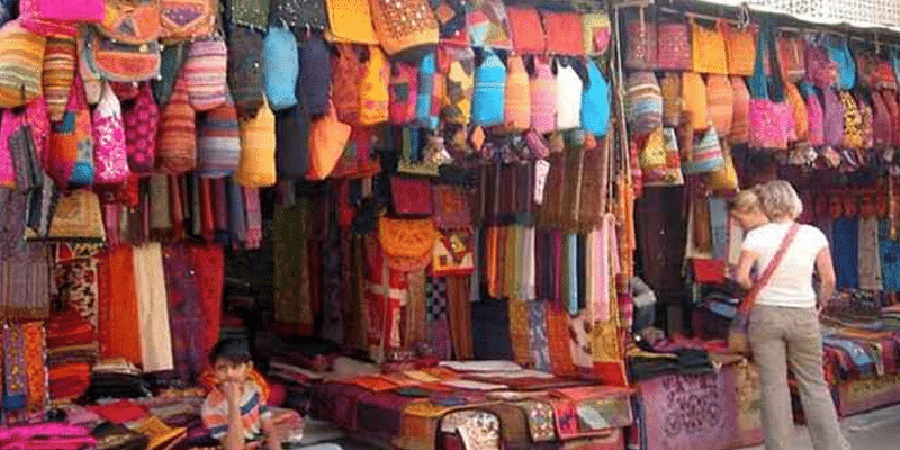
If you want something to take home that you genuinely can’t find anywhere else, head to Chandpole Bazaar.
Located near the Chandpole Metro Station, this market is famous for marble carvings, wooden sculptures, and a bewildering range of handicrafts. The lane called Khazanewaalon ka Raasta here is especially worth exploring — it’s lined with workshops selling turbans, carpets, hand-painted miniatures, and terracotta art.
What to buy:
- Marble inlay décor (vases, trays, decorative tiles)
- Hand-carved wooden sculptures
- Miniature paintings in traditional Rajasthani style
- Blue pottery items (look for genuine pieces — they’re lighter and have a distinct translucence)
Insider tip: Blue pottery is actually a craft that Jaipur is globally known for, but it doesn’t use clay — it’s made from a mixture of quartz, glass, and fuller’s earth. Genuine pieces feel lighter than ceramic. Avoid heavily discounted pieces from tourist stalls near Hawa Mahal — they’re often mass-produced.
Approx. price range: Marble souvenirs ₹300–₹8,000 | Miniature paintings ₹500–₹15,000+
Timings: 11 AM onwards, all days
5. Kishanpole Bazaar – For Fabric Lovers & Block-Print Enthusiasts
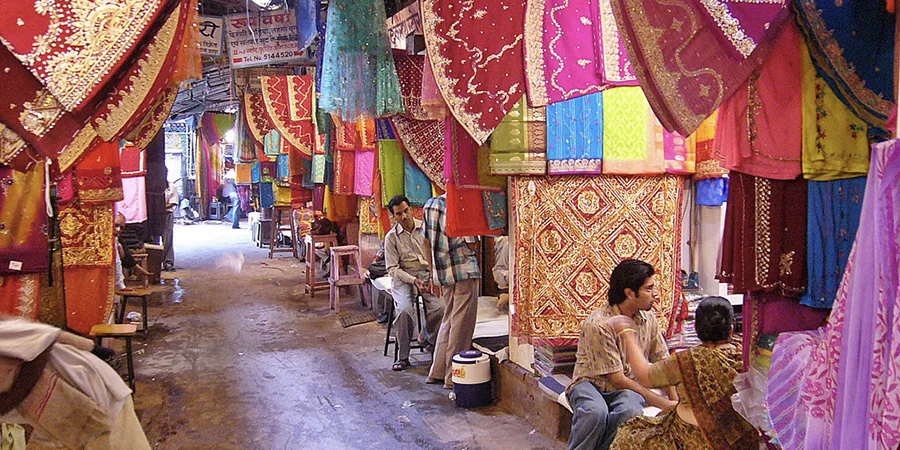
If textiles make your heart race, Kishanpole Bazaar is your final destination in Jaipur.
This market is a sprawling celebration of Rajasthan’s textile heritage. Block-printed fabrics, hand-woven durries, Bandhani sarees, and wooden furniture fill every shop. The artisans here are specialists — many families have been block-printing fabric for three or four generations, and you can spot the difference between machine prints and genuine hand-block work just by touching the fabric.
What to buy:
- Hand-block printed fabric by the metre
- Rajasthani durries (flat-weave rugs)
- Bandhani sarees and dress material
- Wooden furniture and carved décor pieces
Insider tip: For authentic block-printed fabric, look at the back of the cloth. Genuine hand-block prints show slight colour bleeding or irregularity on the reverse side. Machine prints are perfectly uniform on both sides.
Approx. price range: Block-print fabric ₹150–₹600/metre | Durries ₹1,200–₹8,000
Timings: 10 AM – 9 PM, all days
Quick Shopping Tips Before You Go
- Bargain everywhere except fixed-price government emporia (look for Rajasthali stores)
- Carry cash — most street vendors and small shops don’t accept cards
- Shop on weekday mornings for better deals and less crowd
- Avoid peak summer (April–June) — markets get intensely hot by midday
- October to March is the best season for shopping in Jaipur
FAQ – Shopping in Jaipur
What is Jaipur most famous for shopping? Jaipur is most famous for gemstone jewellery, block-printed textiles, blue pottery, lac bangles, and hand-embroidered leather mojris.
Which is the best market in Jaipur for jewellery? Johari Bazaar is the go-to market for jewellery — from everyday silver pieces to premium Kundan and gemstone ornaments.
Is bargaining allowed in Jaipur markets? Yes, bargaining is standard practice in all street markets. Government-run emporia like Rajasthali have fixed prices.
What is the best time to visit Jaipur’s markets? Weekday mornings between 10 AM and noon are ideal. Avoid Sundays for Tripolia Bazaar as it remains closed.
Can I find authentic handloom fabric in Jaipur? Yes — Kishanpole Bazaar and Bapu Bazaar both have authentic hand-block printed and handloom fabric. Look for slight irregularities as a sign of genuine hand-crafting.