Rajasthan Monsoon Tour Packages: Why July–September Is the Best-Kept Secret
Most people plan Rajasthan trips in winter. Cool weather, clean skies, golden forts — it all makes sense.
But here’s what those people miss: Rajasthan in the monsoon is something entirely different. And honestly? It might be better.
Imagine standing on the terrace of a heritage haveli in Udaipur. Rain is falling softly over Lake Pichola. The Aravalli hills have turned a lush, impossibly green. The crowds? Nearly gone. The prices? Much lower. The feeling? Completely magical.
That’s what a Rajasthan monsoon tour package gives you — a version of the state that most tourists never see.
When Is Monsoon Season in Rajasthan?
Rajasthan’s monsoon runs from July to September, with August being the peak month. Temperatures during this period range between 28°C–35°C — far more comfortable than the brutal 45°C+ summers.
Rainfall is moderate and mostly comes in short, refreshing bursts — not the heavy, all-day downpours you’d see in Kerala or Mumbai. This makes sightseeing very much possible.
Top Destinations to Include in Your Monsoon Package
Udaipur — Most Beautiful in the Rain
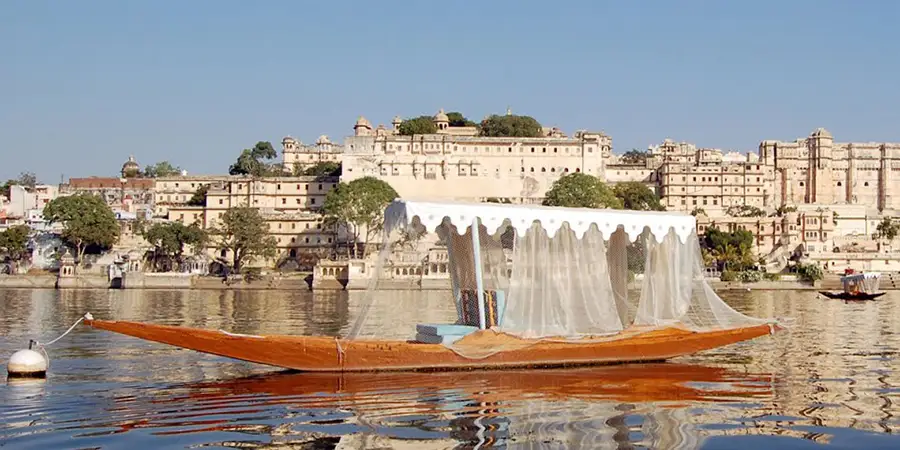
Udaipur earns its nickname “Venice of the East” most convincingly during monsoon. Lake Pichola and Fateh Sagar Lake fill up completely, and their surfaces mirror the palaces in a way that feels almost unreal.
Don’t miss:
- Boat ride on Lake Pichola at dusk (₹400–₹700 per person)
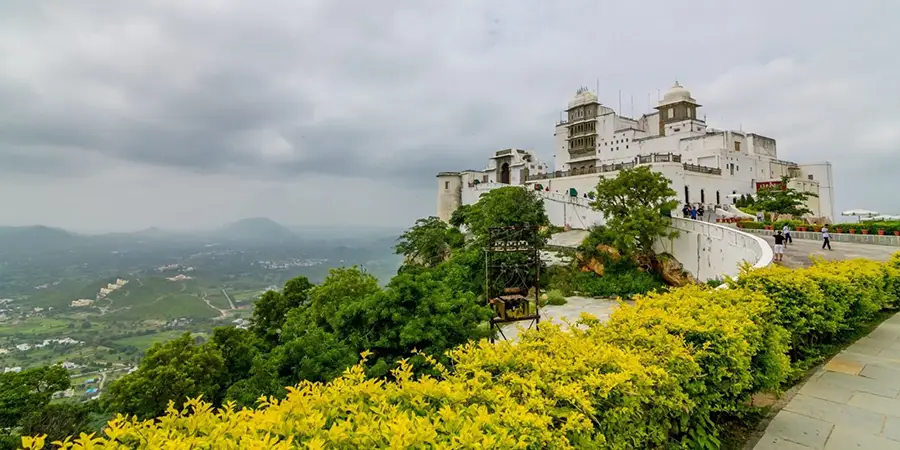
- Monsoon Palace (Sajjangarh) — perched on a hilltop, offering sweeping misty views of the city
- Saheliyon Ki Bari — the garden’s fountains come alive in the rain
Local tip from Udaipur: The Monsoon Palace is best visited around 5–6 PM when low clouds drift across the Aravalli hills behind it. Carry a light jacket — the breeze turns cool fast.
Mount Abu — Rajasthan’s Only Hill Station
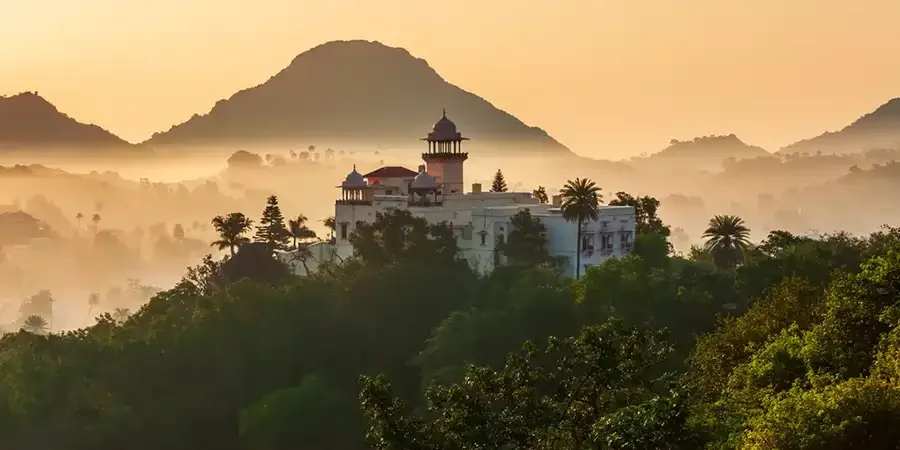
At 1,220 metres above sea level, Mount Abu is cooler, greener, and more alive in the rains than at any other time. Waterfalls appear on hillsides that are dry and dusty in April.
Don’t miss:
- Nakki Lake boating (₹100–₹200 per person)
- Guru Shikhar trek for misty panoramic views
- Dilwara Jain Temples — intricate marble carvings that look stunning in soft monsoon light
Ranthambore — Best Time for Wildlife

Most people assume monsoon means no wildlife. Actually, the opposite is true. The forest becomes dense and green, water sources fill up, and animals move more freely. Ranthambore National Park’s tiger zone reopens after the brief closure, usually by October — but the surrounding zones remain active. Safari booking through the forest department starts at ₹1,500–₹2,500 per person.
Bundi — The Hidden Gem No One Talks About Enough
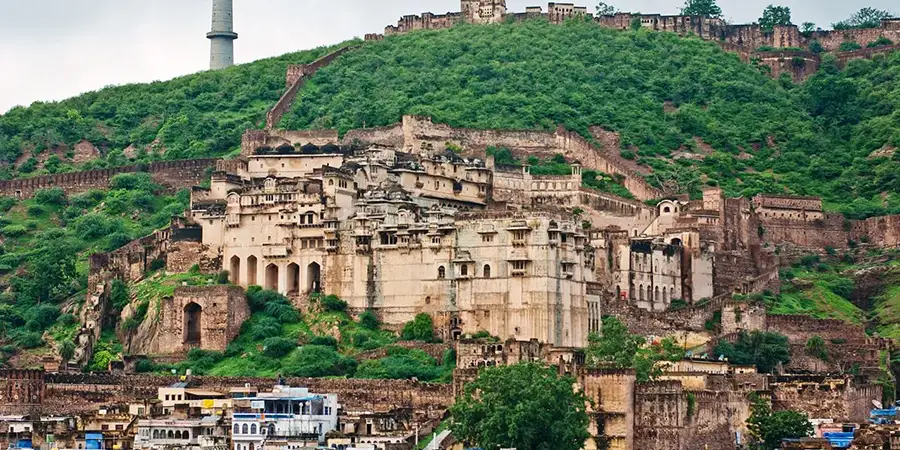
Bundi is criminally underrated. During monsoon, its stepwells (baolis) fill with emerald-green water, its narrow blue-painted lanes glisten, and the hilltop Taragarh Fort feels almost ghostly in the mist. Nobel laureate Rudyard Kipling reportedly wrote parts of Kim while staying at the Sukh Mahal here.
Entry to Taragarh Fort: ₹50 for Indian visitors, ₹200 for foreign tourists.
Shekhawati — Open-Air Fresco Gallery After the Rain
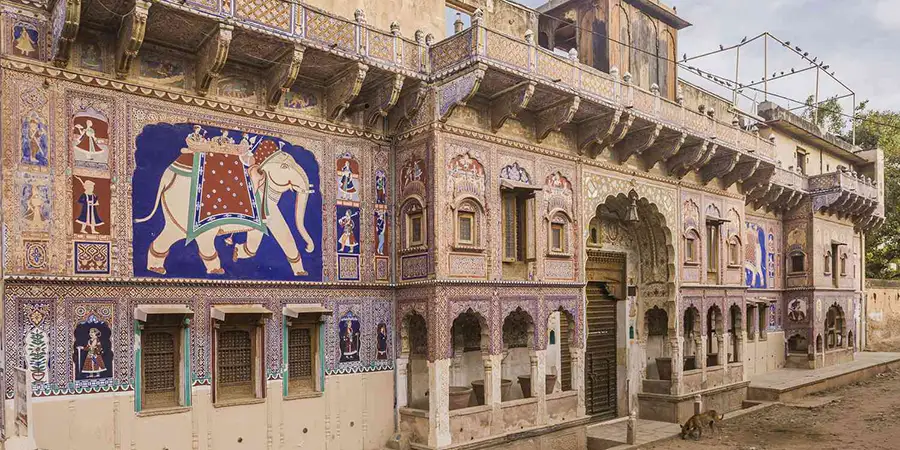
The painted havelis of Mandawa, Nawalgarh, and Fatehpur look dramatically more vivid in the monsoon. The rain washes the dust off centuries-old frescoes, and the light that follows is soft and golden — perfect for photography.
What a Typical Rajasthan Monsoon Package Looks Like
Here’s a rough idea of popular itinerary structures:
| Duration | Route | Approx. Cost (per person) |
|---|---|---|
| 4 Nights / 5 Days | Jaipur – Pushkar – Udaipur | ₹12,000–₹18,000 |
| 6 Nights / 7 Days | Jaipur – Chittorgarh – Udaipur – Mount Abu | ₹20,000–₹32,000 |
| 8 Nights / 9 Days | Jaipur – Ranthambore – Bundi – Udaipur – Mount Abu | ₹28,000–₹45,000 |
Note: Costs vary depending on hotel category, travel mode, and group size. These are approximate indicative ranges.
5 Real Reasons to Travel Rajasthan in Monsoon
- Lower prices — Heritage hotels and resorts offer off-season discounts of 30–50% compared to peak winter rates
- Fewer crowds — Popular sites like Amber Fort and City Palace are far less crowded
- Cooler weather — Exploring forts on foot is actually enjoyable at 30°C
- Festival season — Teej (celebrating the onset of monsoon) and Janmashtami both fall in July–August, with vibrant street celebrations in Jaipur and Udaipur
- Landscape photography — Green Aravallis, full lakes, misty forts — the visual drama is simply unmatched
Practical Tips Before You Book
- Carry rain gear, not a heavy raincoat — A compact umbrella and waterproof sandals work better than bulky gear
- Avoid kaccha (unpaved) roads — In rural Jaisalmer and Barmer, some village roads become muddy and impassable after heavy rain
- Watch your step at forts — Stone steps at Kumbhalgarh, Taragarh, and Chittorgarh turn slippery after rain
- Check safari availability — Some national park zones have restrictions mid-monsoon; always confirm before booking
- Book heritage stays early — Even in off-season, quality heritage hotels in Udaipur and Bundi get booked fast
FAQ — Rajasthan Monsoon Tour Packages
Is it safe to travel Rajasthan in monsoon? Yes, largely. Rajasthan receives moderate rainfall — not the heavy monsoon of coastal states. Normal precautions like avoiding flooded roads and checking weather updates are enough.
Which is the best destination in Rajasthan for monsoon? Udaipur and Mount Abu top the list. Bundi is a strong third for offbeat travellers.
Are Rajasthan tour packages cheaper in monsoon? Yes. Most operators and hotels offer 30–50% lower rates compared to peak season (November–February).
Can I see tigers at Ranthambore in monsoon? Some zones close in peak monsoon, but several remain open. Full safari operations typically resume in October. Always verify current status before booking.
What festivals happen during monsoon in Rajasthan? Teej (July–August), Janmashtami (August), and Gangaur preparations begin in some parts. Teej is especially colourful in Jaipur and Udaipur.
Rajasthan in the rain is not Plan B. For the right kind of traveller — someone who loves depth over crowds, atmosphere over comfort — it might just be Plan A.
Book your Rajasthan monsoon tour package for a version of this royal state that most people never get to see.