Places to Visit in Jaipur During Monsoon — The Pink City Like You’ve Never Seen It
There’s a moment every monsoon when the first rain hits Jaipur’s hot pink walls — and the whole city exhales. The dust settles. The Aravallis go green almost overnight. And suddenly, the city you thought you knew looks like something painted fresh.
Most travellers skip Jaipur in July and August. That’s exactly why you shouldn’t.
Fewer crowds, cooler temperatures (around 25–33°C), lush surroundings, and forts that look straight out of a period film — monsoon is quietly one of the best times to explore Jaipur. Here’s where to go.
Best Places to Visit in Jaipur During Monsoon
1. Nahargarh Fort — Jaipur at Your Feet, Clouds at Your Shoulders
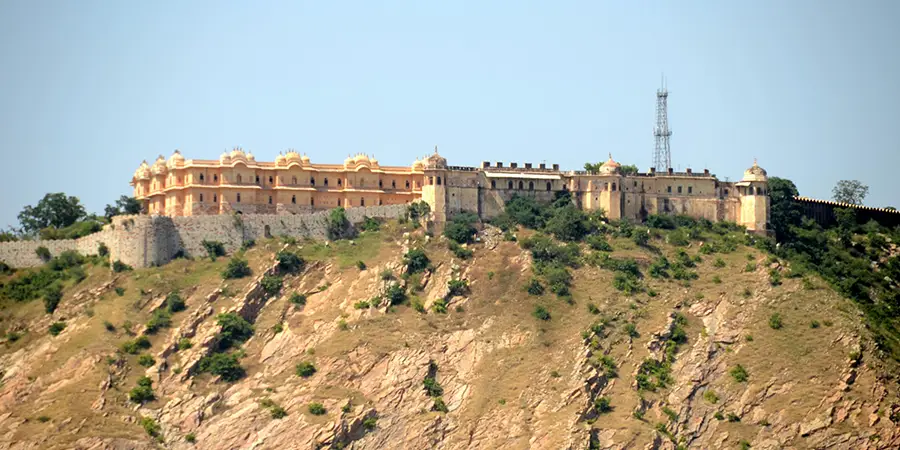
Perched on the Aravalli ridge, Nahargarh Fort transforms completely in the rains. The drive up itself is worth the trip — winding roads flanked by dripping green hills, with peacocks crossing your path like they own the place.
From the top, you get a sweeping panoramic view of the entire Pink City. On a cloudy monsoon afternoon, it looks cinematic. The fort often becomes half-shrouded in mist, giving it a quiet, almost magical quality.
Entry fee: ₹150 for Indians | ₹200 for foreigners
Best time to visit: Late afternoon for clouds and light
Pro tip: Carry a light jacket — the breeze up there can be surprisingly cool
2. Jal Mahal — A Palace That Was Made for the Rain
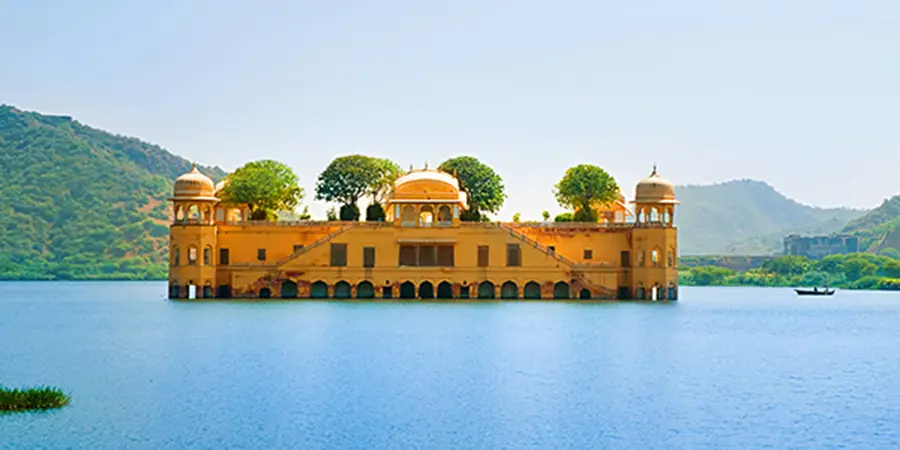
Floating serenely on Man Sagar Lake, Jal Mahal is stunning year-round. But in monsoon? It’s something else entirely. The lake fills up, the surrounding Nahargarh hills go lush green, and the red-sandstone palace seems to float even more dramatically against storm clouds.
You can’t enter the palace, but the lakeside promenade is perfect for a slow monsoon evening walk. The reflections on the water, the smell of wet earth, the birds — it’s one of those rare Jaipur moments that stays with you.
Entry: Free (lakeside view)
Location: Amer Road, about 8 km from city centre
3. Amber Fort — History That Smells Better in the Rain

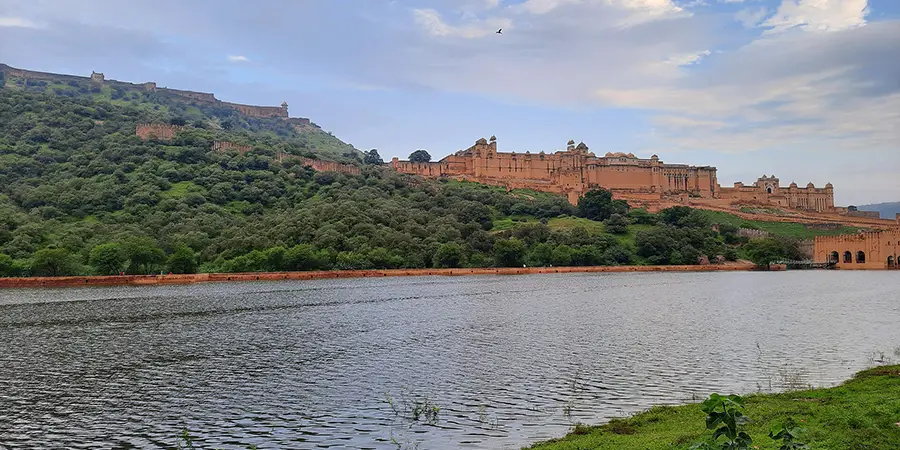
Massive. Majestic. Monsoon-washed. Amber Fort embraces the rains like no other monument in Jaipur. The hills around the fort look really fresh and green in monsoon, and the Maota Lake in front fills up beautifully, giving you a reflection shot that photographers dream about.
Footfall thins out compared to peak season (October–February), which means you can actually walk slowly through the Sheesh Mahal, hear the echoes in the courtyards, and feel the history up close.
Entry fee: ₹200 for Indians | ₹700 for foreigners
Timing: 8:00 AM – 5:30 PM
Tip: Visit on a slightly overcast morning — the light on wet sandstone is extraordinary for photos
4. Sisodia Rani Garden — Jaipur’s Best-Kept Monsoon Secret
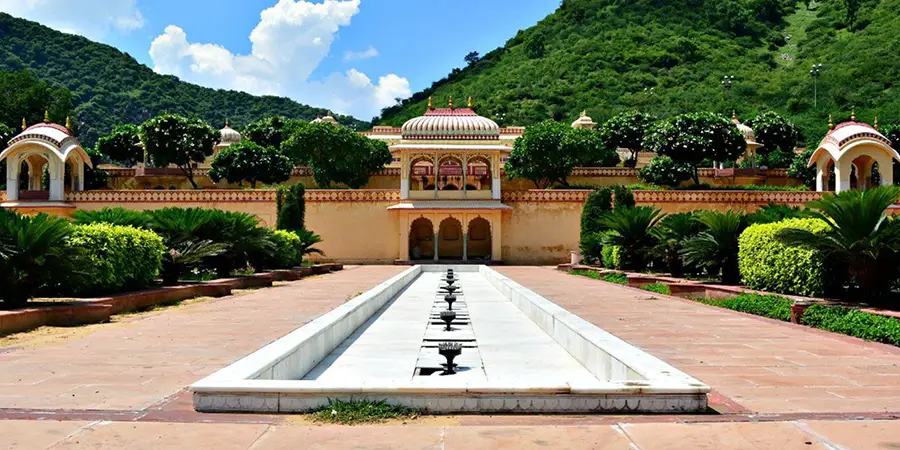
Most tourists walk right past this gem. The moment the rains arrive, this terraced royal garden bursts into life — parrots return, peacocks roam freely, and the fountains add a rhythmic charm.
Built by Maharaja Sawai Jai Singh II for his queen Sisodia Rani, this garden has Mughal-style fountains, painted pavilions, and terraced levels that look absolutely alive during monsoon. Unlike Jal Mahal or Amber Fort, it rarely feels crowded.
Entry fee: ₹30 for Indians
Location: Agra Road, about 10 km from city centre
5. Ramgarh Lake — The Scenic Drive Jaipur Locals Actually Do
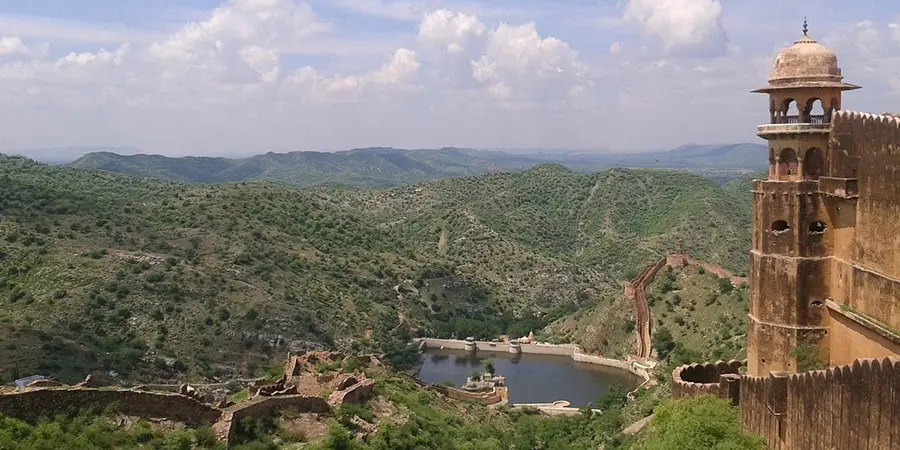
About 35 km from Jaipur, Ramgarh Lake is where locals head when the rains begin. The rain transforms this place magically, revealing a picturesque landscape and lush greenery that feels nothing like the dry Rajasthan of summer.
Pack some snacks, drive out with friends or family, sit by the water, and just breathe. It’s that simple — and sometimes that’s exactly what a monsoon trip needs to be.
6. Galtaji Temple — Waterfalls, Monkeys, and a Rare Monsoon Surprise
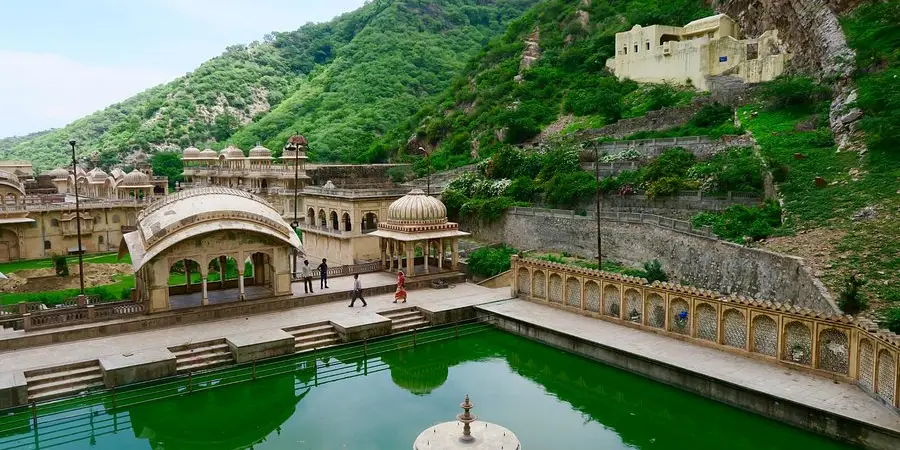
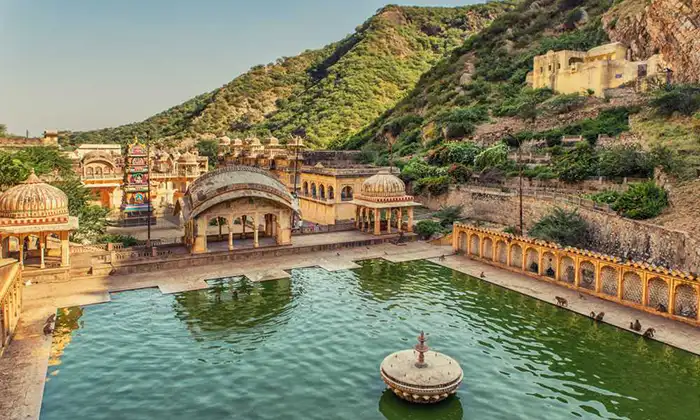
Galtaji Temple is known for its natural spring, and in monsoon you can witness a small waterfall forming nearby — something most visitors never even know exists. The forested hills around the temple come alive with colour and sound. The kund (sacred tank) fills with natural rainwater, and the whole atmosphere feels deeply serene.
Entry: Free
Best for: Nature lovers, spiritual travellers, offbeat explorers
Monsoon in Jaipur: Things to Know Before You Go
- Season: July to mid-September. August tends to be the wettest month.
- What to pack: Light cotton clothes, a compact umbrella or poncho, waterproof footwear
- Getting around: Hire a local cab or auto for flexibility — monsoon roads can get slippery on two-wheelers
- Street food moment you can’t skip: Grab hot mirchi vada or pyaaz kachori from any roadside stall during a drizzle. It’s a full Jaipur experience in one bite.
- Hotel rates: Monsoon is off-season — expect 30–40% lower rates at most mid-range and heritage properties
FAQs — Places to Visit in Jaipur During Monsoon
Q: Is Jaipur worth visiting during monsoon?
Yes — the weather is cooler, crowds are thin, hotel rates drop, and the forts and gardens look their most dramatic against rain and greenery.
Q: Which is the best monsoon spot in Jaipur for couples?
Jal Mahal and Sisodia Rani Garden are ideal — scenic, peaceful, and very photogenic.
Q: Is Amber Fort safe to visit during heavy rain?
The fort is generally safe but can get slippery on wet stone steps. Wear good grip footwear and avoid visiting during very heavy showers.
Q: What is the temperature in Jaipur during monsoon?
Typically between 25°C and 33°C — considerably more comfortable than Jaipur’s summer peak of 45°C+.
Q: Are all monuments open during the monsoon season?
Yes, all major monuments remain open year-round. Always verify timings on the official Rajasthan Tourism portal before your visit, as they may change.
Planning a monsoon trip to Jaipur? Explore curated Rajasthan monsoon packages on RajasthanYatra.in for the best local experiences.