Kolvi Caves Jhalawar: A Personal Journey Into Rajasthan’s Forgotten Buddhist Past
Visiting Kolvi Caves in Rajasthan had long been on my list—not because they are famous, but because they are almost unknown. Hidden in the quiet village of Kolvi in Jhalawar district, these caves offer a powerful glimpse into an era when Buddhism shaped the cultural landscape of this region. My journey to this ancient site turned out to be one of the most meaningful heritage experiences I’ve had in Rajasthan.
Reaching Kolvi: The Start of a Unique Experience
The road to Kolvi winds through peaceful countryside, and as the laterite hill came into view, I realized how isolated this ancient monastic centre must have been. Once home to nearly 50 rock-cut caves, the site now stands weathered but still majestic in its silence.
It is a steep climb up the hill but it is rewarding. The further I climbed, the more the exits of caves could be seen–small dark holes that were cut centuries earlier by Buddhist monks.
The Walking through the Caves: A glimpse into the life of monasticism.
The caves within the complex have shown the traces of architecture that talk of a lively monastic society:
- Stone-cut monastic cells and stone beds.
- The ruins of two-storey buildings.
- Both chambers of meditation were carved with amazing accuracy.
- Stupa-oriented chaitya-style halls.
- Worn out yet eloquent figures of the Buddha.
Although a lot of structures have fallen because of natural weathering, the remaining parts still bear a distinct spiritual power.
The Most Striking Moment: Stupas and Sculptures of Buddha
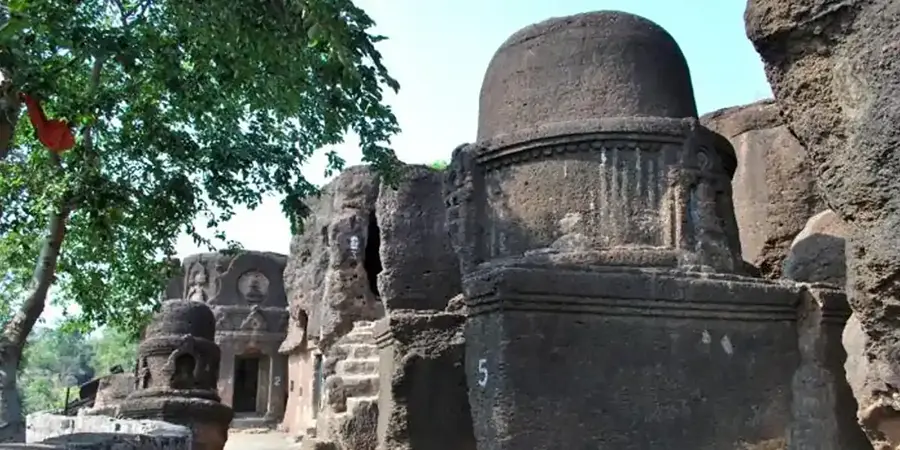
The highlight of my visit was standing inside a chaitya hall where a towering rock-cut stupa still rises from the floor. Despite erosion, the structure feels incredibly powerful—almost as if time stands still around it. Nearby, the remnants of Buddha images, both seated and standing, offered a deeply moving connection to Rajasthan’s Buddhist past.
A Site Weathered by Time, Yet Spiritually Alive
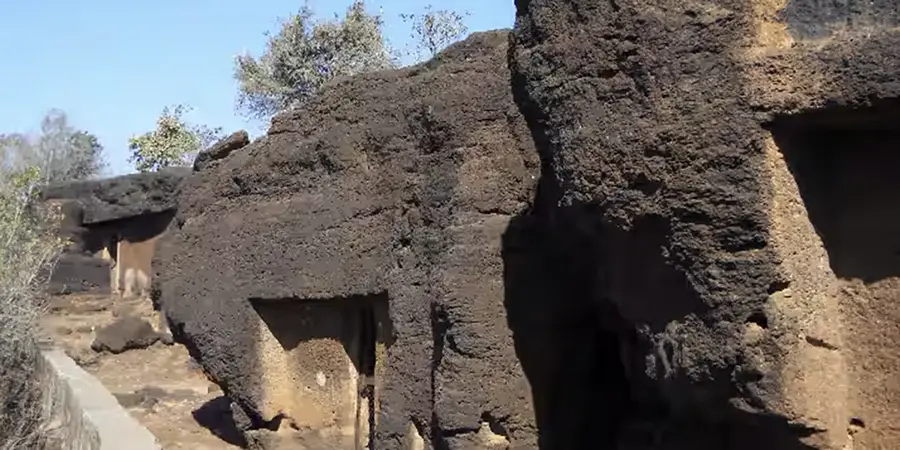
The Kolvi Caves are weak at present. A good many caves, particularly on the north and eastern slopes, have fallen in, at least in part. Sculptures have been smoothed, columns have been shattered, doorways have been made slimmer.
There is the beauty of Kolvi in that weakness. The quietness, the lack of people, the naked beauty of weathered rock carry you easily off to another time. It is not a tourist attraction, it is a living museum, exposed to the sky, and formed by the elements.
Why Kolvi Caves Matter: Key Takeaways
The following are the key arguments that explain why Kolvi Caves are important in the history of Rajasthan:
- Buddhist rock-cut architecture in Rajasthan is rare.
- After becoming a huge complex with 50 or more caves with stupas, chaityas, and viharas.
- Characteristics Buddha statues, meditation cells, monastic living quarters.
- Approximately dated to the 8th-9th century CE (according to heritage sources)
- Displays the remains of a former thriving Buddhist community.
- In a natural state of decay, but of historical value.
- Provides a serene, non-crowded experience to heritage travelers.
Concluding Remarks: Why You need to visit Kolvi Caves.
I really enjoyed my trip to Kolvi as I was impressed by the monks who managed to create a whole spiritual universe with the help of one hill. The location can be worn out, yet it provides a unique, close-up experience with the less known Buddhist history of Rajasthan. Kolvi Caves should be on your list of places to visit in case you like places that are not commercialized by tourism.
FAQs About Kolvi Caves, Jhalawar
1. Where are Kolvi Caves located?
Kolvi Caves are situated in Kolvi village of Jhalawar district, Rajasthan, carved into a laterite-rock hill.
2. How old are the Kolvi Caves?
Heritage sources estimate them to date around the 8th–9th century CE.
3. What can visitors see at Kolvi Caves?
Visitors can see rock-cut stupas, chaityas, meditation cells, monastic chambers, and remains of Buddha statues.
4. Are the Kolvi Caves well preserved?
No. Many caves have collapsed or eroded due to natural weathering, but significant structures still survive.
5. Why are Kolvi Caves important?
They represent one of Rajasthan’s few surviving Buddhist monastic sites and showcase unique rock-cut architecture.