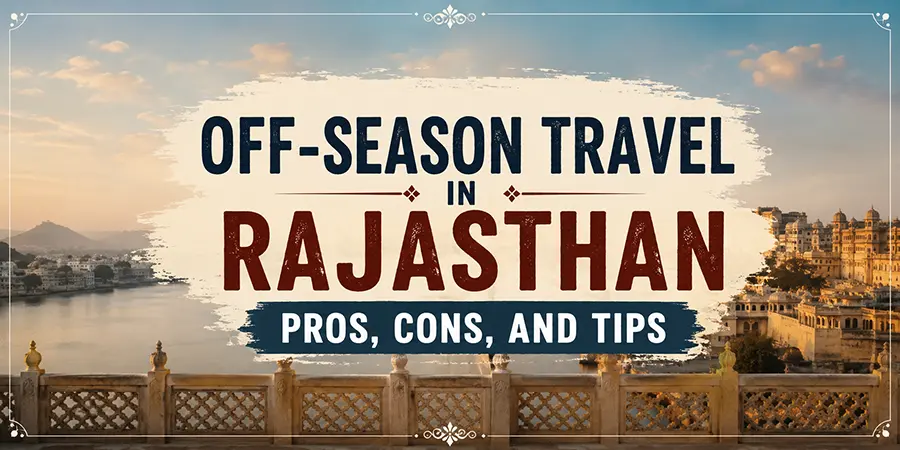
Off-Season Travel in Rajasthan: Pros, Cons, and Tips
Off-season travel in Rajasthan means visiting between April and September, when summer heat and monsoon rains keep most tourists away. It’s not the easiest time to explore the state, but for travellers who plan around the weather, it opens up lower prices, empty monuments, and a side of Rajasthan that winter visitors never see. This guide breaks down exactly what to expect, month by month, so you can decide if it’s the right call for your trip.
What Counts as Off-Season in Rajasthan
Rajasthan’s tourist calendar has one clear peak: October to March, when daytime temperatures sit between 10°C and 28°C and every fort, haveli, and desert camp is running at full capacity. Everything outside that window is off-season, and it splits into two very different halves.
- Summer (April to June): Dry, brutal heat. Daytime temperatures regularly cross 40°C, and cities like Jaisalmer, Bikaner, and Jodhpur can touch 45–48°C in May and June.
- Monsoon (July to September): Warm and humid, with intermittent rain rather than constant downpours. Western desert towns stay mostly dry; Udaipur, Mount Abu, and the Aravalli belt get the most rainfall and turn green.
Neither half feels like the postcard version of Rajasthan. But each has a distinct trade-off, and knowing which one you’re signing up for matters more than the generic “off-season” label.
Pros of Visiting Rajasthan Off-Season
Lower prices across the board. This is the single biggest reason people choose off-season travel. Heritage hotels and palace properties that charge premium winter rates often cut prices by 30–50% between April and September, since occupancy drops sharply once the heat sets in. Flights, guides, and taxis follow the same pattern, and you’ll have real room to negotiate on local transport and shopping, which almost never happens in peak season.
Monuments without the crowds. Amber Fort, Mehrangarh, City Palace — in winter, these sites can mean hour-long queues and courtyards packed shoulder to shoulder. Off-season, you can walk through the same spaces at your own pace, actually read the information plaques, and get photographs without fifty strangers in the frame.
A completely different landscape in monsoon. Rajasthan is defined by its dust and its dunes, so the monsoon transformation catches most first-time visitors off guard. Udaipur’s Lake Pichola and Fateh Sagar fill up and reflect the palaces properly again. The Aravalli hills around Mount Abu turn green. Stepwells that sit dry and cracked most of the year hold water. If you’ve already done the classic winter circuit and want to see Rajasthan differently, this is genuinely worth planning around.
Easier bookings, more flexibility. You can usually get same-week reservations at popular heritage properties, switch dates without penalty, and build a looser itinerary since you’re not racing other tourists for slots at desert camps or sunset points.
Wildlife sightings improve in early summer. Counterintuitively, April and May can be good months for tiger safaris at Ranthambore. As waterholes shrink, animals concentrate around the remaining water sources, which increases the odds of a sighting — a detail most “avoid summer” articles skip entirely.
Cons of Visiting Rajasthan Off-Season
Summer heat is genuinely dangerous, not just uncomfortable. Temperatures above 45°C aren’t rare in Jaisalmer, Bikaner, and Jodhpur through May and June. Outdoor sightseeing between 11 am and 4 pm isn’t just unpleasant — it carries a real risk of heat exhaustion, especially for older travellers, young children, or anyone not used to dry desert heat. Camel safaris and open-air fort walks that are the highlight of a winter trip become genuinely hard to enjoy.
Monsoon brings its own disruptions. Rain isn’t heavy or constant across most of Rajasthan, but when it does come down, unpaved roads to rural villages or smaller forts can turn muddy, and occasional flash flooding has closed roads around Udaipur and the southern hill belt in past years. Humidity also climbs, which makes even 30°C feel sticky and draining.
Some activities shut down or lose their appeal. Camel safaris in Jaisalmer continue year-round, but the dramatic sunset-over-dunes experience loses its shine under monsoon cloud cover or summer haze. A few wildlife zones adjust access during heavy rain, so it’s worth checking specific park status before booking a safari.
Fewer travellers around means less of a “buzz.” Winter’s crowds also bring energy — busier markets, more street food stalls open, livelier havelis. Off-season quiet is a plus for photography and unhurried sightseeing, but if part of your trip’s appeal is festival crowds and market chaos, you’ll notice the difference.
Not every property or vendor operates at full capacity. Some smaller guesthouses and independent tour operators scale back off-season staffing or temporarily close, so it’s worth confirming operating status directly rather than assuming everything listed online is running normally.
Off-Season Rajasthan: City-by-City Notes
Destination Off-Season Experience Best Suited For Udaipur Lakes fill up, city looks its best in monsoon Photographers, couples, monsoon-season visitors Mount Abu Stays cool year-round (23–33°C even in peak summer) Anyone wanting to avoid the desert heat entirely Jaipur Hot and dry in summer, greener in July–August Budget travellers comfortable with heat, early-morning sightseeing Jodhpur & Jaisalmer Extreme heat, minimal rain even in monsoon Only for well-prepared summer travellers; skip April–June if heat-sensitive Ranthambore Best wildlife sightings pre-monsoon (April–May) Wildlife photographers and safari-focused trips Bundi & Banswara Notably green and scenic during monsoon Off-the-beaten-path monsoon travel
Practical Tips for Off-Season Travel in Rajasthan
Plan your day around the sun, not the clock. In summer, sightsee between 6 am and 10 am, then again after 5 pm. Use the midday hours for travel between cities in an air-conditioned vehicle, or rest indoors — most heritage hotels have thick-walled interiors that stay noticeably cooler than the outside temperature.
Choose accommodation with reliable air conditioning. This matters more than star rating in summer. A mid-range hotel with strong AC and hot water will serve you better than a heritage property running on older cooling systems.
Pack for both extremes if you’re travelling June–July. Light cotton clothing, a wide-brim hat, and high-SPF sunscreen for the heat; a compact raincoat, umbrella, and quick-dry footwear in case the monsoon arrives early. Carrying both isn’t overkill — the transition weeks are genuinely unpredictable.
Stay hydrated deliberately, not just when thirsty. Carry electrolyte sachets or ORS, especially for multi-city summer itineraries with long drives. Dehydration sneaks up faster in dry desert heat than most travellers expect.
Build in flex days if you’re visiting during monsoon. A day or two of buffer protects you against road closures or delayed transfers without forcing you to cut a destination entirely.
Favour western, drier routes if you want to minimise rain risk. Jaisalmer and Bikaner receive light, scattered monsoon rain compared to Udaipur and the Aravalli belt, so a western-focused itinerary is a reasonable way to reduce weather disruption while still travelling off-season.
Check specific wildlife park and monument status before booking. Some sanctuary zones and rural sites adjust access seasonally — a quick check with the property or park authority saves a wasted trip.
Who Off-Season Travel Actually Suits
Off-season Rajasthan works well for budget-conscious travellers, photographers chasing dramatic light or monsoon greenery, repeat visitors who’ve already covered the winter classics, and anyone genuinely comfortable adapting their schedule around extreme weather. It’s a harder sell for first-time visitors travelling with young children or elderly family members, anyone with a tight day-by-day itinerary that can’t absorb weather delays, or travellers whose main goal is classic camel-safari-at-sunset desert imagery, which peak winter still delivers best.
Frequently Asked Questions
Is it safe to travel to Rajasthan in the off-season? Yes, with sensible precautions. Summer travel requires hydration, shade during peak heat hours, and air-conditioned transport. Monsoon travel requires flexibility around occasional road disruptions. Neither season carries risks beyond what careful planning can manage.
Which off-season month is better — summer or monsoon? Monsoon (July–September) is generally more comfortable, with lower temperatures and the added bonus of green landscapes and full lakes, particularly around Udaipur and Mount Abu. Summer (April–June) suits travellers prioritising the lowest prices and don’t mind the heat, or those hoping for better wildlife sightings at Ranthambore.
How much can I save by travelling off-season? Hotel prices are typically 30-50% lower than winter peak season, but the specific savings vary by property, city, and how close to season you book. Treat any specific figure as an estimate and confirm current rates directly with hotels.
Do I need a raincoat for a summer trip, or just monsoon? Pre-monsoon showers can appear in June, so it’s worth packing light rain protection even on a summer-labelled itinerary, particularly if your trip runs into late June or early July.
The Bottom Line
Off-season travel in Rajasthan is a genuine trade-off, not a compromise dressed up as a deal. You give up the ideal 10–25°C sightseeing weather and the festival energy of winter, and in exchange you get real savings, empty monuments, and — if you time it for monsoon — a green, water-filled version of the state that winter travellers never see. If you can plan your days around the heat and stay flexible around rain, it’s a legitimate way to see Rajasthan differently, not just a cheaper way to see it the same.