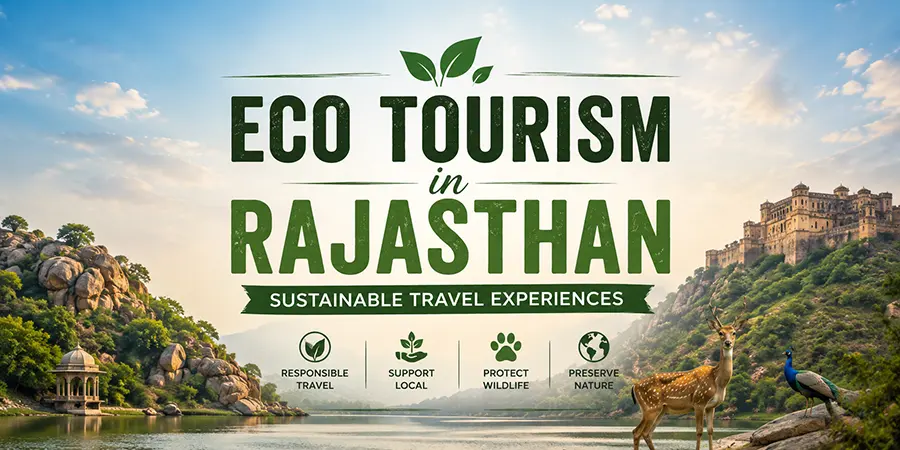
Eco Tourism in Rajasthan: Sustainable Travel Experiences
Eco Tourism in Rajasthan is no longer a niche idea for the odd nature-lover — it’s fast becoming the way sensible travellers explore this desert kingdom. I have watched Rajasthan change over the years. Camel carts on dunes, solar lamps in havelis, jeeps replaced with cycles in old-city lanes. The state is quietly rewriting how it welcomes guests.
If you’ve ever stood at Jaisalmer’s sand dunes at sunset and wondered how long that silence will last with hundreds of jeeps roaring past daily, you already understand why this matters.
What Is Eco Tourism in Rajasthan, Really?
In short: Eco Tourism in Rajasthan means visiting the state’s forts, deserts, lakes and wildlife in a way that conserves natural resources, respects local communities and minimises the impact on the environment.
This isn’t about giving up comfort. It’s about choosing a homestay over a five-star chain, a camel safari over a diesel jeep, and a local guide over a generic tour package.
Rajasthan is a dry, water-stressed state. Every plastic bottle, every idling engine, every over-pumped borewell adds pressure to an already fragile ecosystem. Responsible choices here genuinely matter more than in greener regions.
Why It Matters: The Policy Behind the Push
Rajasthan wasn’t just talking about sustainability — it acted on it. The state’s eco-tourism policy announced in July 2021 replaces one drafted in 2010 and emphasizes the importance of balancing the promotion of tourism with the safeguarding of the environment and local communities.
That’s a genuine milestone most travel blogs skip past quickly. It means forest departments, homestay owners, and safari operators are now working under an official framework — not just marketing themselves as “eco-friendly” for a listing photo.
Best Places for Eco Tourism in Rajasthan

1. Ranthambore National Park Home to the Bengal tiger, this is where responsible wildlife tourism started proving its worth financially. Safari revenue directly funds anti-poaching and habitat work. Jeep (Gypsy) safaris run around ₹1,600–1,700 for Indian nationals and considerably more for foreign visitors, with canter safaris being the budget-friendly shared option — though rates are revised each season, so always check current forest department pricing before booking.

2. Keoladeo National Park, Bharatpur A UNESCO World Heritage bird sanctuary near Bharatpur. Walk or cycle through it instead of driving — the park is compact, and rickshaws pulled by local guides double as informal nature-interpretation tours.

3. Sariska Tiger Reserve Less crowded than Ranthambore, which itself is a form of sustainable travel — spreading tourist load protects both wildlife and visitor experience.
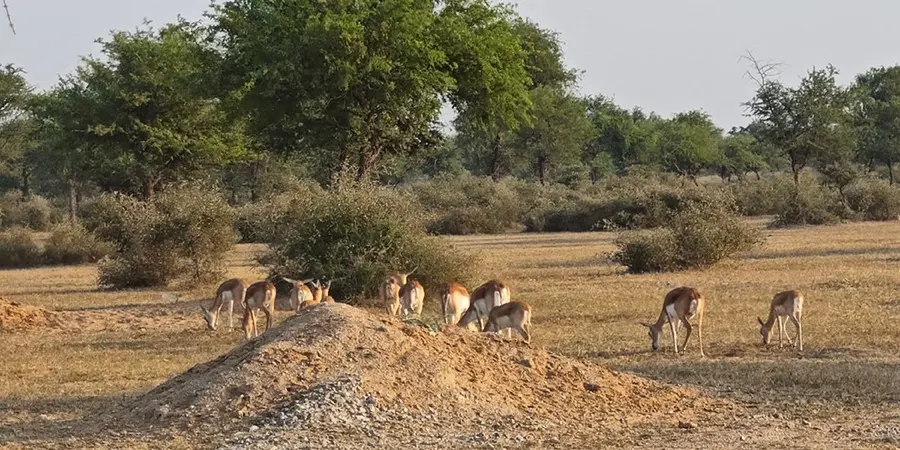
4. Tal Chhapar Sanctuary A quiet blackbuck sanctuary near Churu, rarely on the standard tourist trail, and a fine example of offbeat travel reducing pressure on hotspots like Jaipur and Udaipur.
Where to Stay: Eco-Lodges and Village Homestays
Heritage havelis converted into boutique stays now commonly use solar water heating, rainwater harvesting, and kitchen gardens. Village homestays around Shekhawati, Bishnoi villages near Jodhpur, and Samode go further — guests eat what’s grown locally and often join a well-cleaning or tree-planting activity during their stay.
A genuine insight from the ground: many small Udaipur and Jaisalmer guesthouses switched to solar water heaters not for marketing, but because diesel-generated electricity became too expensive. Sustainability and economics often move together here.
How to Travel Sustainably in Rajasthan: A Quick Checklist
- Carry a refillable bottle — most heritage hotels now offer filtered water stations
- Choose camel or cycle safaris over motorised dune-bashing in Jaisalmer and Bikaner
- Book homestays or family-run havelis instead of large hotel chains where possible
- Buy handicrafts directly from artisans in Bagru, Sanganer, or Barmer rather than mass-produced souvenirs
- Hire local guides — they know the land and the stories behind it
- Travel by train between cities (Jaipur–Udaipur–Jodhpur) instead of flying short hops
- Avoid single-use plastic; many forts now ban it outright, including parts of Amber Fort
Common Traveller Doubts, Answered
Is eco tourism in Rajasthan more expensive? Not always. Homestays and shared canter safaris often cost less than luxury resorts and private jeeps. Sustainable doesn’t automatically mean pricier.
Which season is best for eco tourism in Rajasthan? October to March, when the desert heat eases and most national parks, including Ranthambore, are open (parks typically close through the monsoon months of July–September).
Are eco-lodges comfortable enough for families? Yes. Most heritage eco-stays blend traditional architecture with modern plumbing and air-conditioning — the “eco” part is in energy and water systems, not in giving up basic comfort.
A Small, Honest Truth
Rajasthan’s forts have survived centuries of invasions, droughts, and empires. Overtourism and careless travel habits are a newer, quieter threat. Choosing eco tourism in Rajasthan isn’t about perfection — it’s about small, consistent choices that let the next traveller see the same golden dunes and painted havelis you did.
Note: Entry fees, safari charges, and park timings are revised periodically by the Rajasthan Forest Department and Rajasthan Tourism. Always confirm current rates directly with the department or a licensed operator before booking.