
Monsoon Mount Abu Tour: Rajasthan’s Romantic Beauty
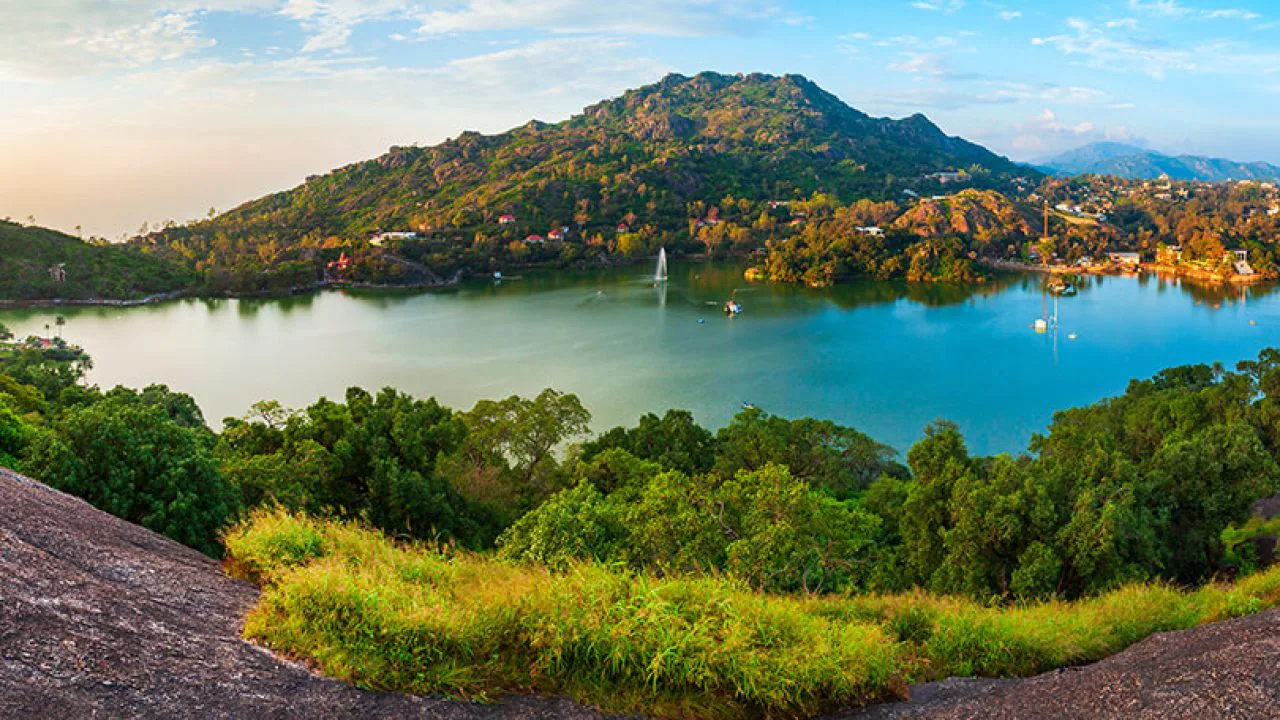
Imagine standing at the edge of the Aravalli hills. It rained an hour ago. The whole hillside smells of wet earth and wild grass. Mist curls slowly around the treetops. Below you, Nakki Lake reflects a sky full of fat grey clouds.
This is not Shimla. This is not Manali. This is Mount Abu — Rajasthan’s only hill station — and during the monsoon, it quietly becomes one of the most romantic places in all of western India.
Most travel guides will tell you to visit in October or November. And yes, that season has its charm. But those who have experienced Mount Abu in July or August know a secret: the rains turn this place into something truly magical. Fewer tourists, lower prices, and a completely different side of the desert state.
Why Monsoon Is Actually the Best Time to Visit Mount Abu
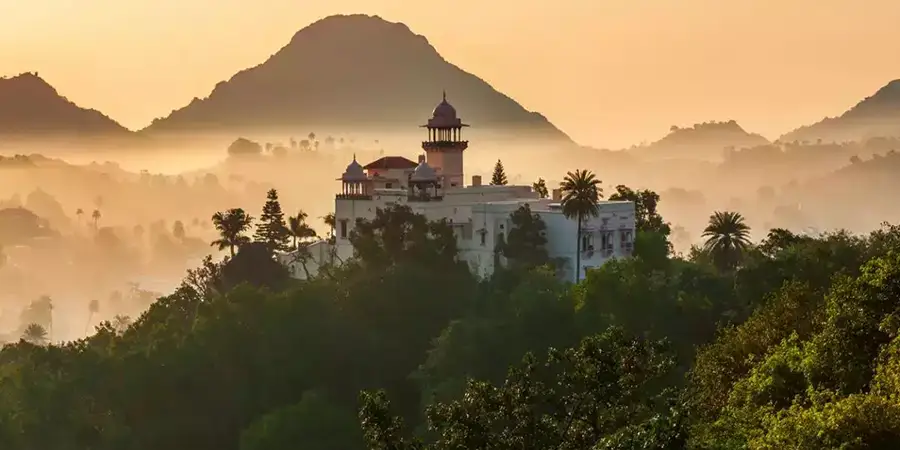
Rajasthan in July? Most people think “too hot” or “flooding.” But Mount Abu sits at an elevation of around 1,220 metres in the Aravalli Range, which means the weather plays by different rules here.
During monsoon (July to September), temperatures stay between 20°C and 28°C — genuinely cool by Rajasthan standards, where the plains can touch 42°C at the same time. Short spells of rain keep the air fresh and the hills dramatically green.
And here’s what most blogs miss: Mount Abu doesn’t receive torrential monsoon showers like Kerala or Himachal. The rains come in light bursts — enough to paint everything a vivid green, but not so heavy that your plans wash away.
What’s special about it for Couples and Honeymooners:
- Misty mornings that look like a film set
- Deserted viewpoints where you don’t have to fight for space
- Lower hotel rates — off-season discounts of 30-50% are common
- A slower quieter pace that peak season simply doesn’t offer.
Top Places to Visit during monsoon Mount Abu Tour
1. Nakki Lake — The Heart of Abu
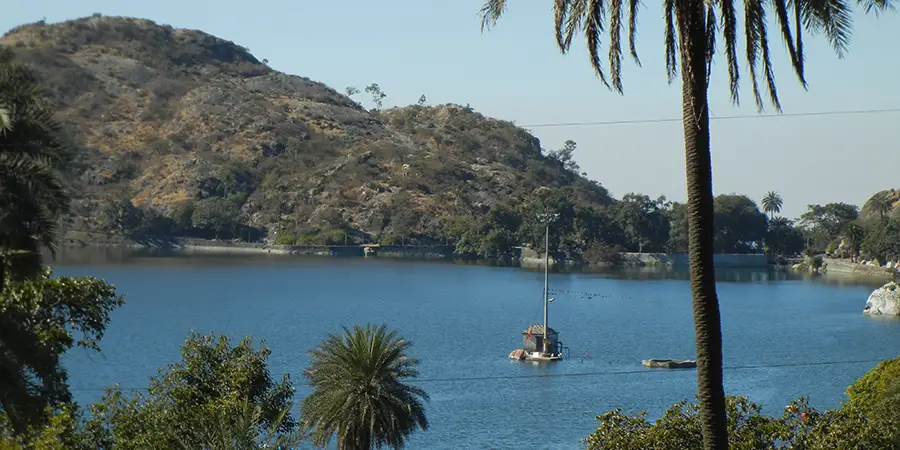
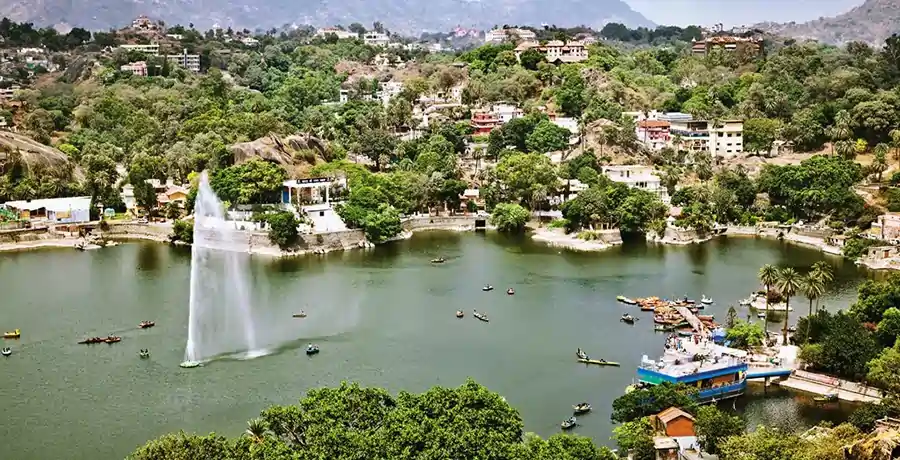
Nakki Lake is the soul of Mount Abu, and monsoon brings out its finest mood. The surrounding Aravalli hills turn deep green. Clouds hover low over the water. You can rent a paddle boat or row boat for roughly ₹100–₹150 per person for 30 minutes and feel completely removed from the world.
In the evenings, vendors along the promenade sell corn, kachori, and masala chai. The cool air and light drizzle make it the perfect setting for a slow, unhurried evening together.
Tip: Visit Toad Rock, just a short walk uphill from the lake, for a bird’s-eye view of Nakki. It looks stunning when the lake is silver-grey under monsoon clouds.
2. Guru Shikhar — The Highest Point in the Aravalli Range
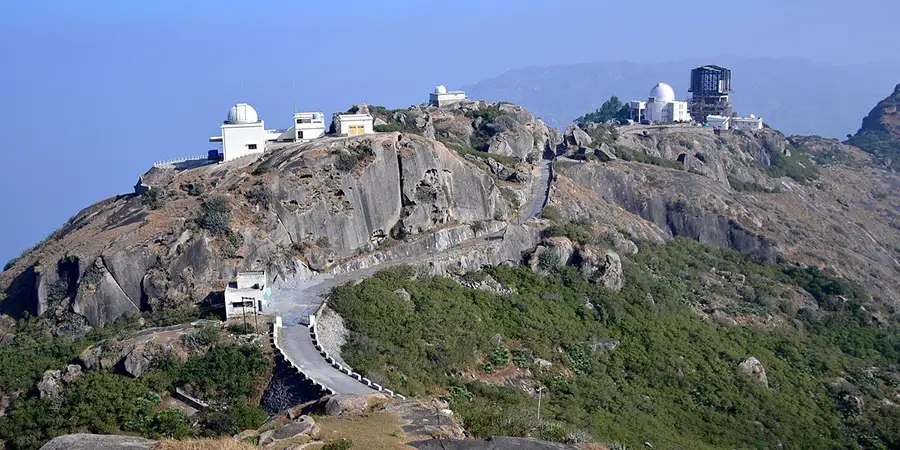
At 1,722 metres, Guru Shikhar is the highest peak in the entire Aravalli Range. During monsoon, the drive up is lined with thick green forest, small waterfalls dripping off the rock face, and rolling mist that makes the whole landscape look painted.
The view from the top — when the clouds part for even a few minutes — is genuinely breathtaking. You’re looking out over hills and valleys all the way to the horizon.
Entry is free. A small temple at the peak dedicated to Guru Dattatreya adds a spiritual touch that feels very much in keeping with the calm monsoon mood.
Tip: Go early morning. The mist is thicker, the air is cooler, and you’ll have the viewpoint mostly to yourself.
3. Dilwara Temples — Architecture That Silences You
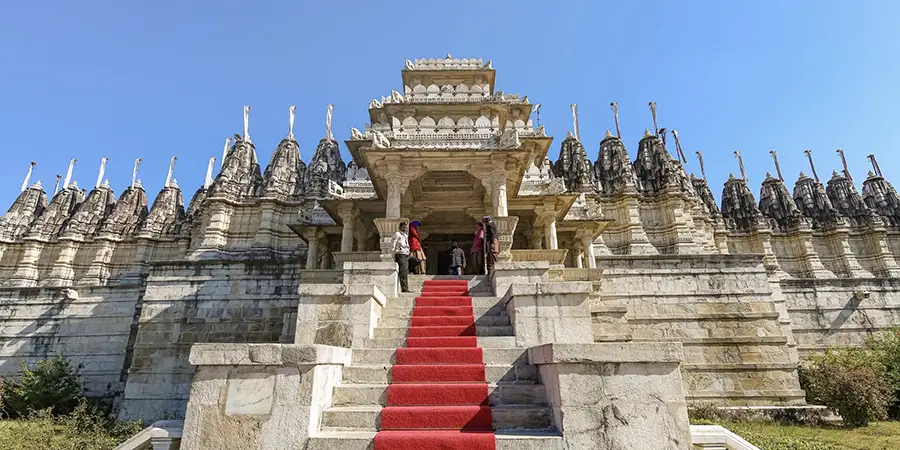
These are among the finest Jain temples in the entire world — and they’re right here in Mount Abu. Built between the 11th and 13th centuries, the Dilwara Temples are made entirely of white marble with carvings so detailed and so delicate that they seem impossible.
Entry is free. Open for tourists from 12 PM to 6 PM (photography is not allowed inside, which actually helps you be more present). During monsoon, the cool light filtering through the marble halls gives the interiors a soft, almost ethereal quality.
4. Sunset Point and Honeymoon Point
These two viewpoints sit close together in the western hills of Mount Abu and offer views across the valley. Monsoon sunsets here are unpredictable — sometimes completely hidden by clouds, and sometimes absolutely spectacular when the sky breaks open in orange and pink just before dark.
Honeymoon Point in particular is a favourite among couples for obvious reasons. A quiet bench, cool air, the distant sound of rain in the trees — it earns its name.
5. Achalgarh Fort — A Hidden Gem
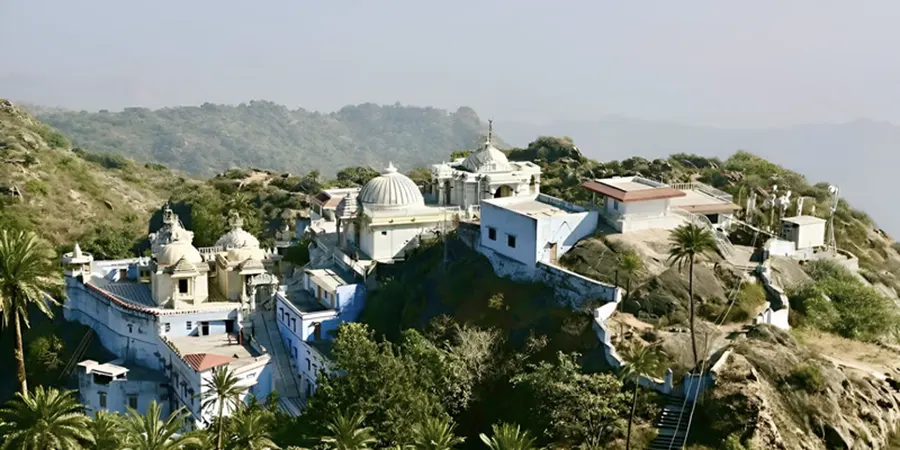
Most tourists skip Achalgarh Fort in favour of more popular spots. This is your advantage during monsoon. The 14th-century fort, built by the Paramara dynasty and later renovated by Rana Kumbha of Mewar, stands quietly in the hills about 11 km from Abu town.
The fort complex includes the beautiful Achaleshwar Mahadev Temple and stunning views of the surrounding hills draped in monsoon green. It’s the kind of place that rewards those willing to go slightly off the usual track.
6. Mount Abu Wildlife Sanctuary
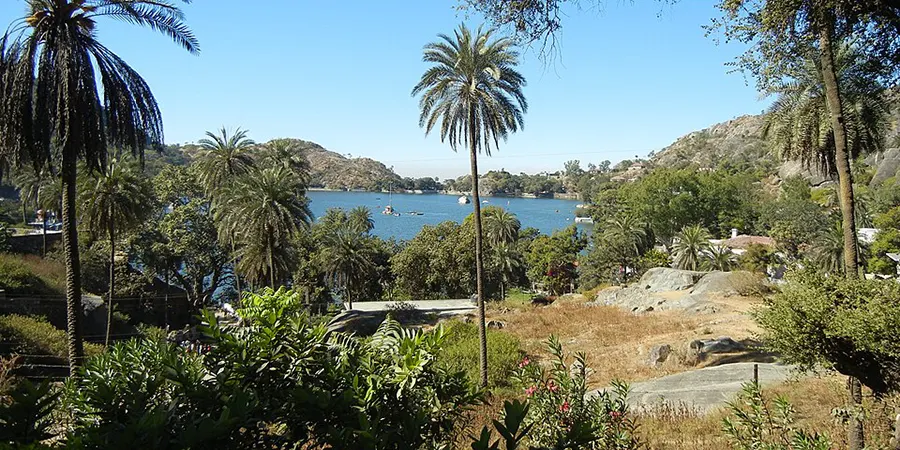
The 290 sq. km sanctuary surrounding Mount Abu comes alive during the monsoon. The vegetation is at its thickest, the birdsong is constant, and you have a real chance of spotting leopards, jackals, langurs, and over 250 species of birds.
Try Bailey’s Walk or Craig’s Path — two trekking trails that remain accessible in the monsoon and offer some of the most beautiful forest walking in Rajasthan.
Practical Travel Tips for Your Monsoon Mount Abu Tour
When to go: Mid-July to late August offers the sweet spot — full monsoon green without the tail-end of heavy rains.
How to reach:
- Nearest airport: Maharana Pratap Airport, Udaipur (approx. 176 km away)
- Nearest railway station: Abu Road Station (28 km from Mount Abu town), well connected to Mumbai, Delhi, Ahmedabad, and Jaipur
- By road: Good highway connections from Udaipur, Jodhpur, Ahmedabad, and Jaipur
How long to stay: 2–3 days is ideal for covering the main attractions without rushing.
What to pack:
- Light rain jacket or windcheater
- Waterproof sandals or quick-dry footwear
- A small umbrella
- Light layers for evenings (it gets genuinely cool after dark)
- Mosquito repellent
Where to stay: Mount Abu has options across every budget. Mid-range hotels in the town centre typically cost ₹1,500–₹4,000 per night during monsoon (off-season pricing). Heritage properties and hill-view resorts can go higher, but offer excellent value compared to peak-season rates.
What to eat: Don’t leave without trying the local Rajasthani thali — dal baati churma, gatte ki sabzi, and ker sangri. Street food near Nakki Lake (roasted corn, kachori, masala chai) hits different in the cool monsoon air.
What Most Blogs Don’t Tell You
Here’s something worth knowing if you’re planning a monsoon trip: Mount Abu gets crowded on holiday weekends, particularly around Independence Day (15 August) and Raksha Bandhan, when families from Gujarat and Rajasthan arrive in large numbers. If you want the quiet, romantic experience, plan your visit for a weekday or avoid those specific long weekends.
Also, the road from Abu Road to Mount Abu is a winding ghat road. It’s perfectly safe and well-maintained, but can get slippery after heavy rain. If you’re self-driving, just take it slow and enjoy the drive — the scenery on the way up is genuinely stunning in monsoon.
FAQ: Monsoon Mount Abu Tour
Is Mount Abu safe to visit during monsoon? Yes. Mount Abu is safe during monsoon season. Roads are maintained and town is well equipped to receive tourists. Standard travel precautions apply — check weather before travel and avoid trekking on trails immediately after very heavy rain.
Is it worth visiting Mount Abu in July or August? Yes, especially for couples and lovers of nature. The hills are lush, the weather is cool, and the tourist footfall is far lower than peak season. You get better hotel rates and a more peaceful experience.
What are the entry fees at Dilwara Temples? Entry to Dilwara Temples is free. Photography is not allowed inside the temples.
Can you trek during monsoon in Mount Abu? Yes. Monsoon trails such as Bailey’s Walk and Craig’s Path are open. Guru Shikhar is also accessible by road. Exercise caution on wet rocks and wear appropriate footwear.
Mount Abu- How many days are enough? Two to three days are sufficient to cover Nakki Lake, Guru Shikhar, Dilwara Temples, Sunset Point, Achalgarh Fort, and the wildlife sanctuary at a comfortable pace.
What is the temperature in Mount Abu during monsoon? Temperatures typically range between 20°C and 28°C during the monsoon months of July and August — cool and pleasant compared to the rest of Rajasthan.
Mount Abu in the monsoon is one of Rajasthan’s most underrated experiences. While the rest of the desert state bakes under a relentless sun, this small hill station quietly turns green and romantic. If you’re looking for a getaway that is peaceful, beautiful, and far more affordable than peak season, this is your window.
Plan ahead, pack light, and let the Aravalli hills do the rest.