
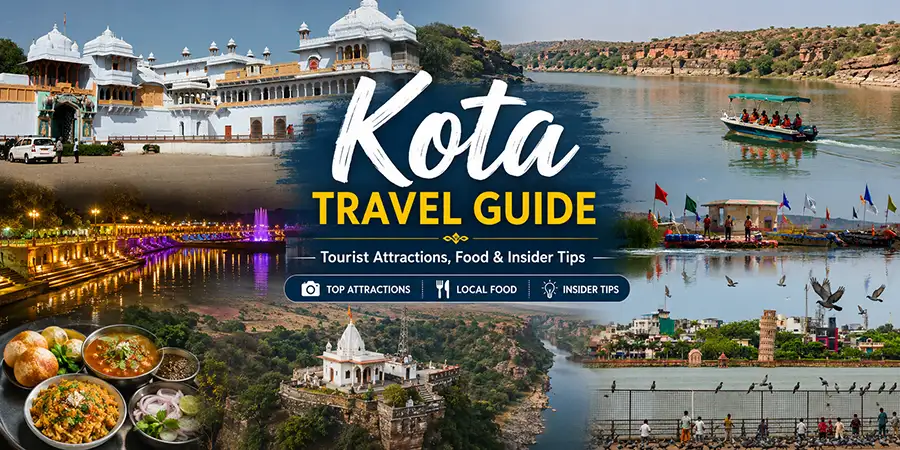
Kota Travel Guide 2026 – Tourist Attractions, Food & Insider Tips
Kota Travel Guide, Rajasthan’s hidden gem — fort, gardens, coaching city culture, and local cuisine.
Most people who pass through Kota are parents dropping their children off for JEE or NEET coaching. They check into a hotel, hand over a bag of home-cooked food, say a teary goodbye, and leave on the next train. They never actually see the city.
That’s a shame. Because Kota — sitting quietly on the banks of the Chambal River — has a personality that most Rajasthan itineraries completely miss.
No, it doesn’t have the fairy-tale grandeur of Udaipur or the golden dunes of Jaisalmer. But it has crocodile-filled river gorges, one of Rajasthan’s most underrated forts, a food scene powered by hungry students, and a cultural identity unlike anywhere else in the state.
Here’s your complete Kota travel guide for 2026 — written for real travellers, not just textbook tourists.
Quick Read: What is Kota Known For?
Kota is the third largest city in Rajasthan with a population of over 1.5 million. It is located about 230 km south of Jaipur on the banks of the Chambal River. The city is most popular for three things:
- Coaching institutes – Over 1.5 lakh students flock here every year to prepare for IIT-JEE and NEET exams. The coaching industry generates an estimated ₹1,500 crore annually.
- Kota Doria sarees – Kota Doria sarees are hand-woven silk-cotton fabric with a unique check pattern, introduced in the 18th century.
- Kota stone – That greenish-blue flooring you see in homes across India? It comes from here.
But for tourists, Kota offers much more than its reputation suggests.
Top Places to Visit in Kota
1. Garh Palace (City Palace) – The Fort You Didn’t Know About
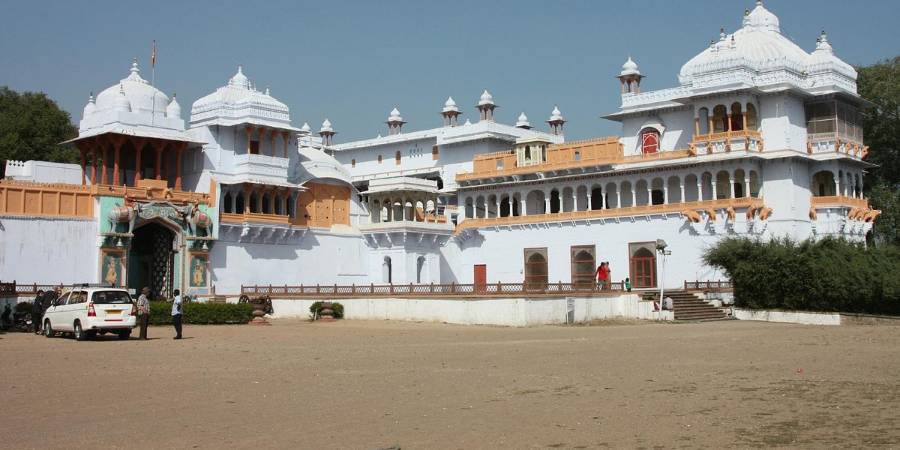
Most visitors to Rajasthan skip Kota entirely. That means you can explore one of the state’s largest palace complexes almost crowd-free.
The Garh Palace is a sprawling mix of Rajput and Mughal architecture, built over centuries by different rulers of the Kota dynasty. Inside the palace walls sits the Rao Madho Singh Museum — home to a remarkable collection of Kota miniature paintings, sculptures, royal arms, and artefacts.
Insider tip: The Kota school of miniature painting is unique. Unlike the bold colours of Rajput art, Kota miniatures show dense forest scenes, royal hunts, and wildlife — deeply naturalistic for their time. Don’t rush past the paintings.
Entry for Indian visitors: approx. ₹50–100. Best visited in the morning before the heat sets in.
2. Chambal River Boat Safari – Kota’s Wildest Experience
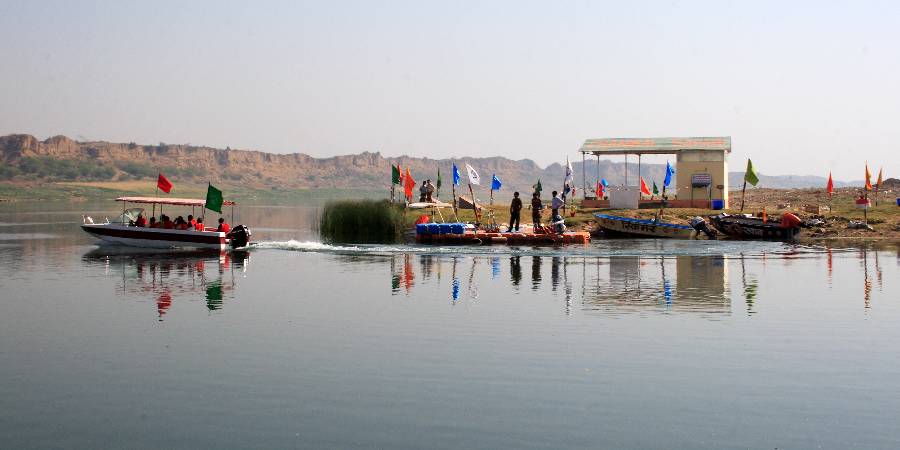
This is the experience that separates Kota from every other city in Rajasthan.
A 2–3 hour boat safari on the Chambal River takes you past rocky gorges, sandbanks, and dense scrub forest. Along the way, you’ll spot ghariyals (long-snouted crocodilians), mugger crocodiles, over 300 species of migratory and resident birds, and if you’re very lucky, a glimpse of the Chambal’s famous river dolphins.
The safari starts from the forest office jetty near Chambal Garden and goes up to Garadia Mahadev — about 12 km one way.
This stretch of the Chambal is part of the Mukundra Hills Tiger Reserve and is one of the cleanest rivers in India. Go early. The light is beautiful, the birds are active, and the heat is manageable.
3. Garadia Mahadev Temple – Kota’s Breathtaking Viewpoint
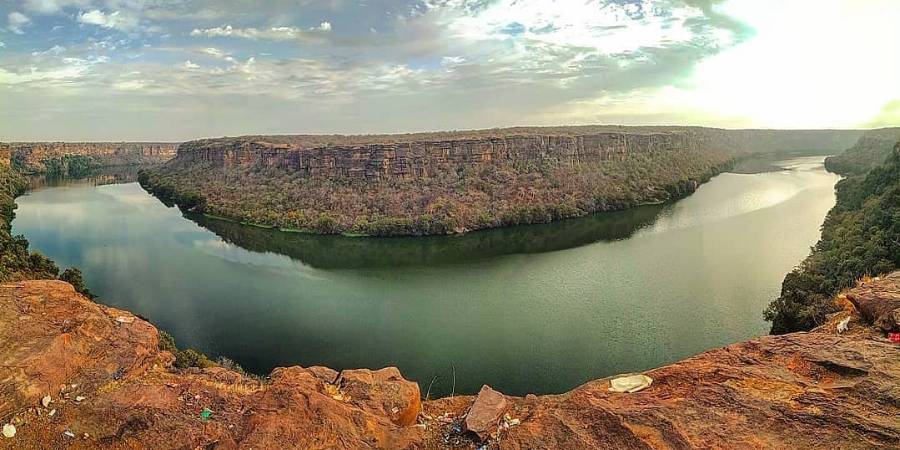
About 15 km from the city, this Shiva temple sits on a cliff 500 feet above the Chambal River. The views from here are genuinely stunning — a sharp bend in the river below, rocky ravines on both sides, peacocks wandering nearby.
You don’t need to be religious to appreciate this spot. Come at sunset. Carry water. Take your time.
4. Chambal Riverfront – More Than Just a Walk
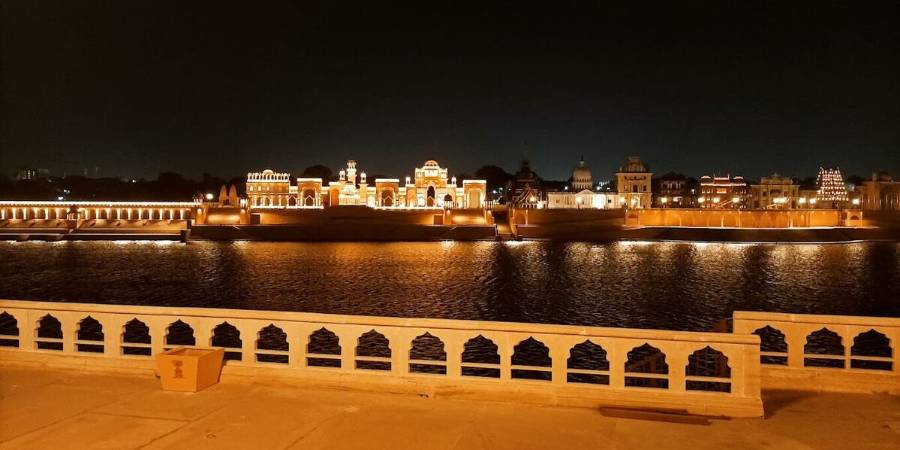
Kota has developed the Chambal Riverfront over 2.75 km along both banks of the river, from Kota Barrage to Nayapura Pulia. It’s billed as India’s first heritage riverfront.
There are 26 themed ghats, a stunning musical fountain show with lights in the evening, an LED garden, and even a “World Heritage Ghat” with miniature replicas of famous structures from around the globe. It sounds touristy — and parts of it are — but the evening light on the river makes it genuinely lovely.
Go after 6:30 PM for the fountain show.
5. Kishore Sagar Lake & Seven Wonders Park
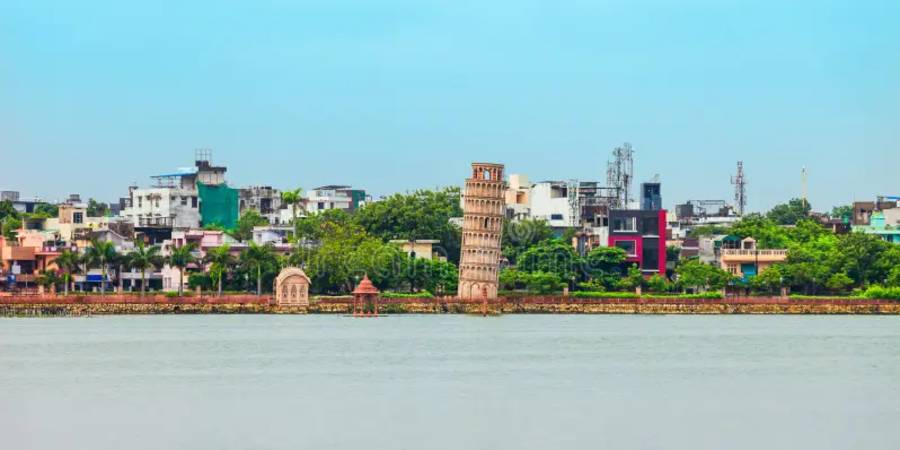
Built in 1346 by a prince of Bundi, Kishore Sagar is an artificial lake at the heart of the city. In the middle of the lake sits Jag Mandir — a small palace accessible by boat.
The adjacent Seven Wonders Park has scale replicas of global landmarks including the Taj Mahal, Eiffel Tower, and the Colosseum. Travellers who’ve visited say the scale and execution are genuinely impressive — especially at night. Take the golf cart if you can; the park is larger than it looks.
Pro tip: Visit in the evening. The replicas are lit up beautifully and the crowds are thinner on weekdays.
6. Kota Barrage – An Underrated Monsoon Spot
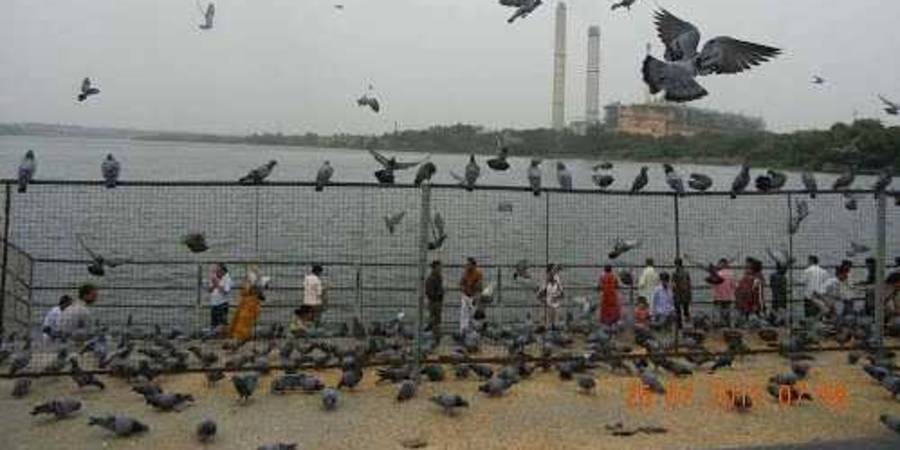
The Kota Barrage on the Chambal River is a massive irrigation dam that most tourists drive past without stopping. But in the monsoon months (July–September), when the gates open and water roars through, it becomes one of the most dramatic sights in the region. If you’re visiting during the rains, don’t miss it.
Kota Food Guide – What to Eat and Where
Kota’s food culture is shaped by two forces: its Rajasthani heritage and its massive student population. The result is a city with excellent street food at honest prices.
Dal Kachori – The Real Kota Experience
Kota Kachori is its own variety. These are deep-fried, flaky pastries stuffed with spiced urad dal or moong dal, finished with hing (asafoetida) that gives them a distinct aroma you can smell from a distance. They’ve been popular since the 1980s — brands like Jai Jinendra, founded in Kota in 1984, have now expanded to Delhi and Jaipur.
Try them at small halwais in Gumanpura and the old city area. Eat them hot, with green chutney and sabzi on the side.
Other Must-Tries
- Mirchi Bada – Green chillies stuffed with spiced potato, battered and fried. Not for the faint-hearted.
- Mawa Kachori – The sweet version, stuffed with reduced milk, dry fruits, and sugar syrup.
- Dal Baati Churma – The classic Rajasthani combination. Rich, filling, and deeply satisfying.
- Gatte ki Sabzi – Gram flour dumplings in a tangy yoghurt-based gravy. Find it at local dhabas.
- Imarti and Ghewar – Traditional sweets available at most sweet shops around the city.
Where to Eat in Kota
- Gumanpura area – Best concentration of kachori shops and street food
- Nayapura Chaupati – Student-friendly snacks, chaats, and quick bites
- Old city bazaar – Traditional halwais for sweets and namkeen
Kota Shopping – What to Buy
Kota Doria Sarees are the city’s most iconic product. These lightweight, semi-transparent sarees made from silk and cotton have a distinctive square check pattern. The real ones are handwoven in Kaithoon, a village about 20 km from Kota where weaving families have practiced this craft for generations. Some premium Kota Doria sarees are woven with real gold threads.
Buy from Kaithoon directly or from reputable shops in the main market — not from roadside vendors near tourist spots.
Also pick up: Kota stone items, traditional namkeens, and packed Dal Kachoris (they last a few days in airtight containers — a fact known to travellers since the Mughal era).
Best Time to Visit Kota
October to February is ideal. The weather is pleasant, wildlife sightings on the Chambal are better, and the Dussehra festival (celebrated with unique theatrical enactments from the Ramayana) is a cultural highlight worth planning around.
Avoid May and June — temperatures can cross 45°C.
How to Reach Kota
- By train: Kota Junction is a major railway station on the Delhi-Mumbai line. Express trains connect it to Jaipur (approx. 2.5 hours), Delhi (approx. 4–5 hours), and Mumbai.
- By road: Kota is about 250 km from Jaipur via NH52. The Delhi-Mumbai Expressway now connects Delhi to Kota in approximately 4 hours, covering 373 km through Rajasthan.
- By air: The nearest airport is Jaipur (approx. 250 km away).
How many days do you require?
1 day: Garh Palace, Chambal Riverfront, Seven Wonders Park, local cuisine
2 day: Chambal boat safari, Garadia Mahadev and a day trip to Kaithoon.
3 day: Enjoy at leisure, visit Mukundra Hills and perhaps take a day trip to nearby Bundi (approx 45 km).
Accommodation in Kota
Kota has a wide range of options — from heritage stays to budget hotels. The Umed Bhawan Palace is the most atmospheric choice if you want heritage. For mid-range comfort, Country Inn & Suites by Radisson Kota is reliable. Budget travellers will find plenty of clean, affordable options near Nayapura and the railway station.
Since the city has a huge student population, rooms are generally available outside peak exam seasons (February–March and October–November).
FAQ: Kota Travel Guide 2026
Is Kota worth visiting as a tourist?
Yes — especially if you enjoy off-the-beaten-path destinations. The Garh Palace, Chambal boat safari and Garadia Mahadev are worth the trip alone.
What is the famous food of Kota?
Dal ka chori. It’s Kota’s culinary identity — crispy, spiced, and deeply local.
Is Kota safe for travellers?
Kota is a safe city with good connectivity. Take normal precautions when visiting and avoid isolated places after dark.
Can I do Kota in a day trip from Jaipur?
Two days is better to properly experience the Chambal River and key attractions, but it is possible.
Garh Palace Kota Entry Fee?
For Indian visitors it is approximately Rs.50-100 and for foreigners it is higher. Do check the latest rates at the entry gate as they keep fluctuating.
What is special about Kota Doria sarees?
They are handwoven silk-cotton sarees with a distinctive square check (khat) pattern, made in the Kaithoon region. Lightweight and breathable, they’re considered among India’s most refined handloom fabrics.
Kota won’t dazzle you the way Jaipur does on a first glance. But spend a day on the Chambal, sit with a plate of fresh kachoris at a Gumanpura stall, and watch the fountain show reflect on the river at night — and you’ll understand why this city deserves a chapter of its own in the story of Rajasthan.
